Steer Tire Tread Depth Checker (DOT Legal Minimums)
FMCSA regulations set a minimum tread depth requirement for every commercial vehicle tire — and the DOT minimum is stricter for steer axle tires than for drive and trailer tires. Running below these minimums is an out-of-service violation that can shut down your truck at a roadside inspection.
Enter your measurements below (in 32nds of an inch, as read from a standard tread depth gauge) to instantly check whether your steer tires meet the federal minimum tire depth required to stay legal.
Enter tread depth in 32nds of an inch for each position (e.g. enter "5" for 5/32").
Minimum Tread Depth Requirements by Axle
The FMCSA sets a different minimum tread depth for each axle position because steer tires carry a disproportionate share of steering and braking responsibility. The DOT minimum for a steer tire is 4/32 of an inch measured at the shallowest major tread groove; drive and trailer tires only need 2/32 of an inch. This 2/32-inch gap exists because a steer tire failure at highway speed is far more dangerous than a drive or trailer tire failure.
| Axle Position | Minimum Tread Depth | Measured At |
|---|---|---|
| Steer axle | 4/32" | Shallowest major groove |
| Drive axle | 2/32" | Shallowest major groove |
| Trailer axle | 2/32" | Shallowest major groove |
These federal figures are the legal floor, not a recommended replacement point — most fleets replace tires well before they reach the tire depth required minimum to leave a margin of safety.
How to Measure with a Depth Gauge
Using a Standard Tread Depth Gauge
A tread depth gauge is a small pin-style or dial tool that inserts into the tire's main tread grooves and reads the remaining rubber depth in 32nds of an inch. To measure correctly:
- Place the gauge's base flat against the tread, perpendicular to the groove.
- Press the pin down until it contacts the base of the groove and read the measurement.
- Take readings at three points across the tire — outer edge, center, and inner edge — plus around the circumference if the tire shows uneven wear.
- Always record the shallowest reading, not the average, since that's the point FMCSA inspectors will check.
Reading Tread Wear Bars
Every DOT-approved tire also has built-in wear bars molded into the tread grooves. When the tread surface becomes flush with these bars, the tire has reached 2/32" and is at the legal minimum for a non-steer position — a quick visual check between full gauge measurements.
Steer Tires vs. Drive and Trailer Tires
Steer tires handle directional control and the majority of braking force transferred through the front axle, which is why tire safety standards treat them differently from drive and trailer positions. A worn steer tire is more likely to hydroplane in wet conditions, resist steering input, and increase stopping distance — all of which compound the risk of a tire depth shortfall on the front axle.
Drive tires convert engine torque into forward motion and benefit from tread designed for traction, while trailer tires mainly need to resist heat buildup and carry weight. Because the consequences of failure differ by position, many fleets rotate tires strategically: newer, deeper-tread tires go on the steer axle, while tires nearing the 2/32" minimum move to trailer positions where the legal bar is lower.
When to Replace
While 4/32" is the legal minimum for steer tires, most safety-conscious fleets and owner-operators replace steer tires at 5/32"–6/32" to keep a margin above the DOT minimum between service intervals. Waiting until a tire is exactly at the minimum tread depth leaves no buffer for uneven wear developing between inspections, and a tire that measures 4/32" in one spot may already be below that at another point on the same tire.
Other replacement triggers that override tread depth alone include sidewall cracking, visible cords, irregular wear patterns (cupping, feathering), and any impact damage from potholes or road debris common on I-40 and US-93.
Tire Safety and Blowout Risk
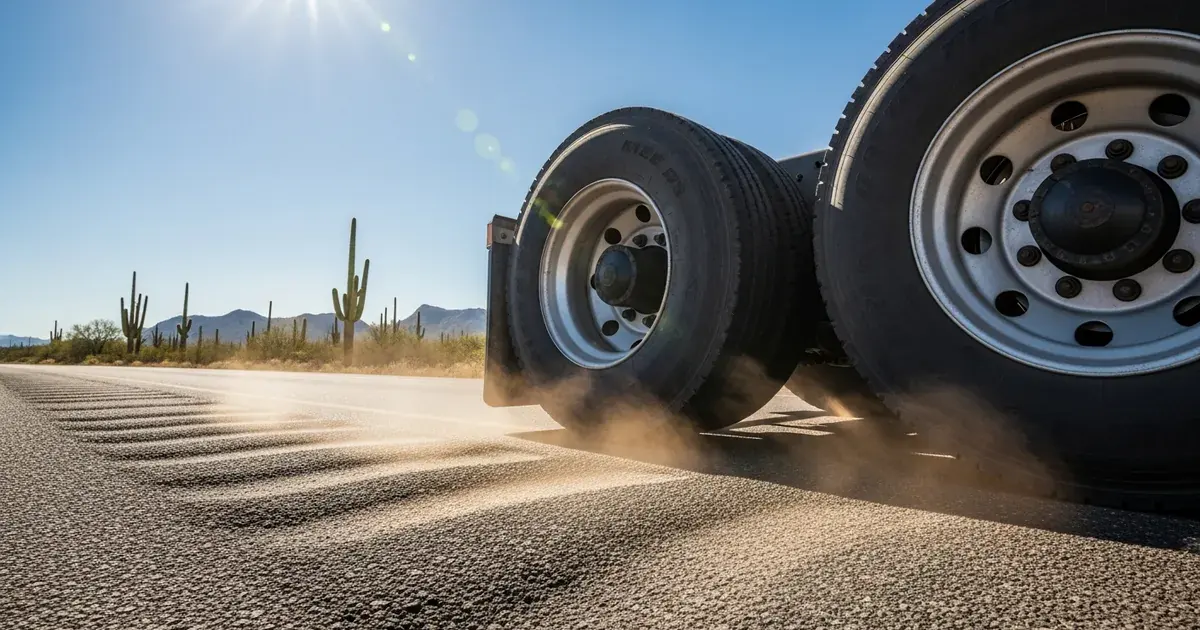
Low tread depth is one of the leading contributors to commercial tire blowouts, especially in hot climates. As tread wears down, the remaining rubber has less material to dissipate heat, and a worn steer tire running underinflated in 110-degree Arizona pavement temperatures is a serious tire safety risk. A steer tire blowout at highway speed can cause loss of steering control immediately, which is why FMCSA holds steer tires to a stricter tread standard than any other position on the vehicle.
CSA and Out-of-Service Consequences
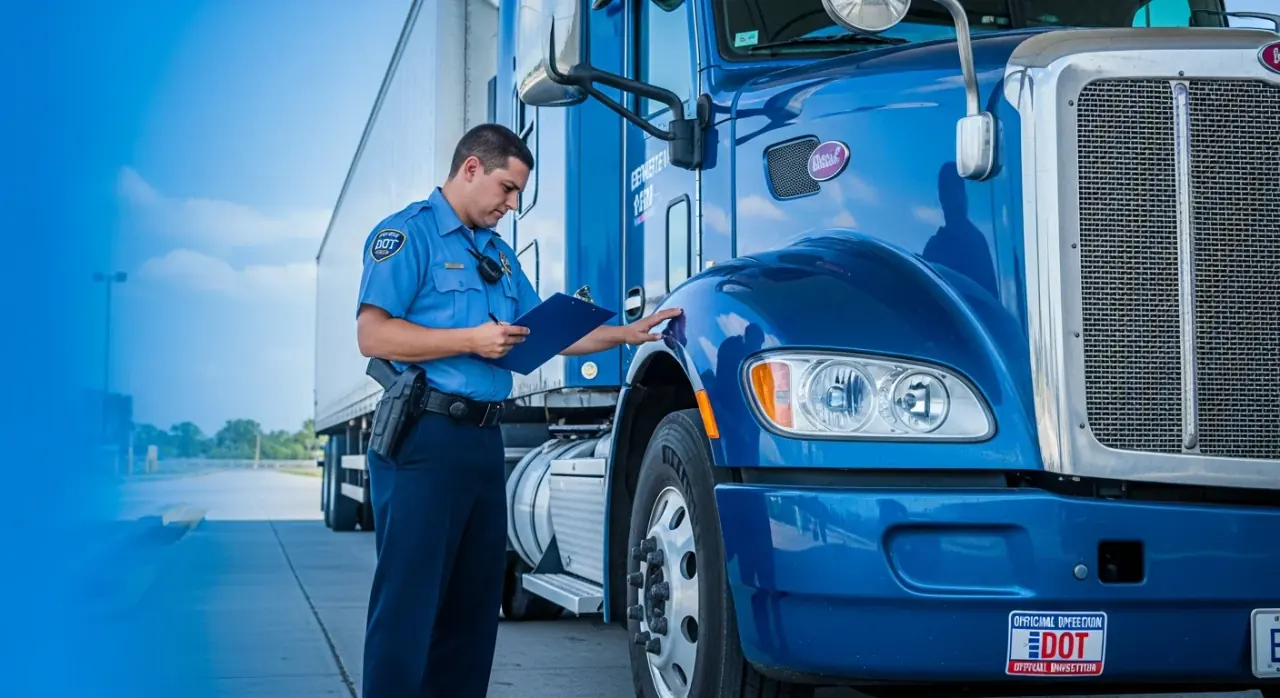
A steer tire measuring below 4/32", or a drive/trailer tire below 2/32", is an automatic out-of-service violation under the North American Standard Inspection criteria. Beyond being placed out of service on the spot, the violation is recorded against your CSA Vehicle Maintenance BASIC score, which can trigger increased inspection frequency and, for carriers, higher insurance premiums. Replacing a tire proactively — before it reaches the DOT minimum — is almost always cheaper than the combined cost of a roadside violation, lost time, and CSA score impact.