Semi Truck Tire Repair Near Me — 24/7 Mobile Service
On-site tire patching, replacements, and balancing to keep your rig rolling safely.
Semi Truck Tire Repair Near Me — 24/7 Mobile Service
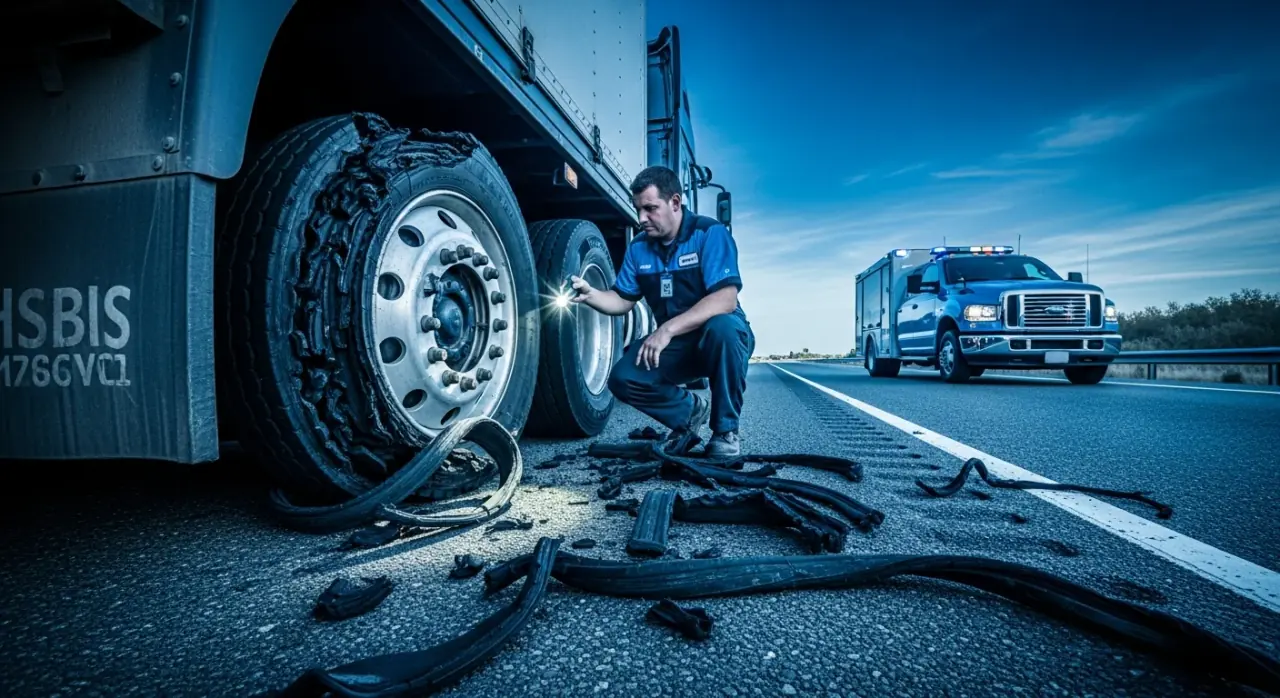
A blowout at highway speed is one of the most dangerous situations a CDL driver can face — shredded rubber damages air lines, fenders, and mud flaps, and a steer tire failure on a loaded rig is immediately life-threatening. Weldon's Truck & Trailer provides 24/7 mobile truck tire repair and commercial tire replacement from Kingman, AZ across a 200-mile radius on I-40, US-93, I-15, and surrounding highways. Our service trucks carry a full inventory of commercial truck tire sizes, mounting equipment, and torque tools — so most roadside tire calls are resolved on the first visit.
Commercial Truck Tire Inventory — Steer, Drive, and Trailer Positions
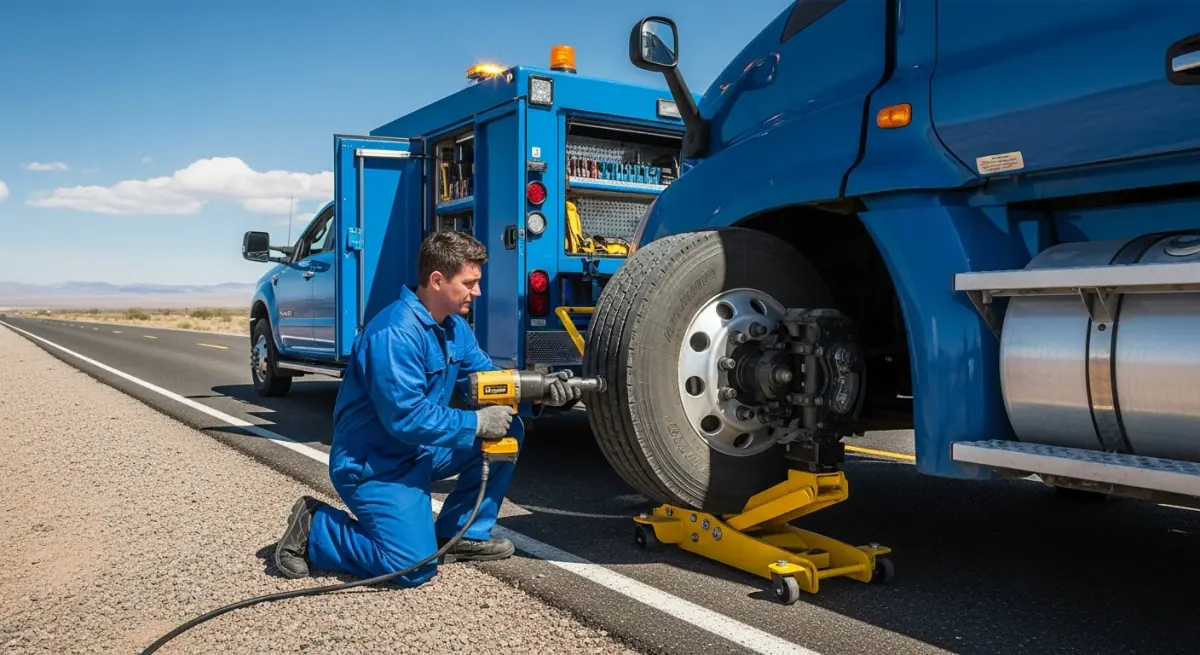
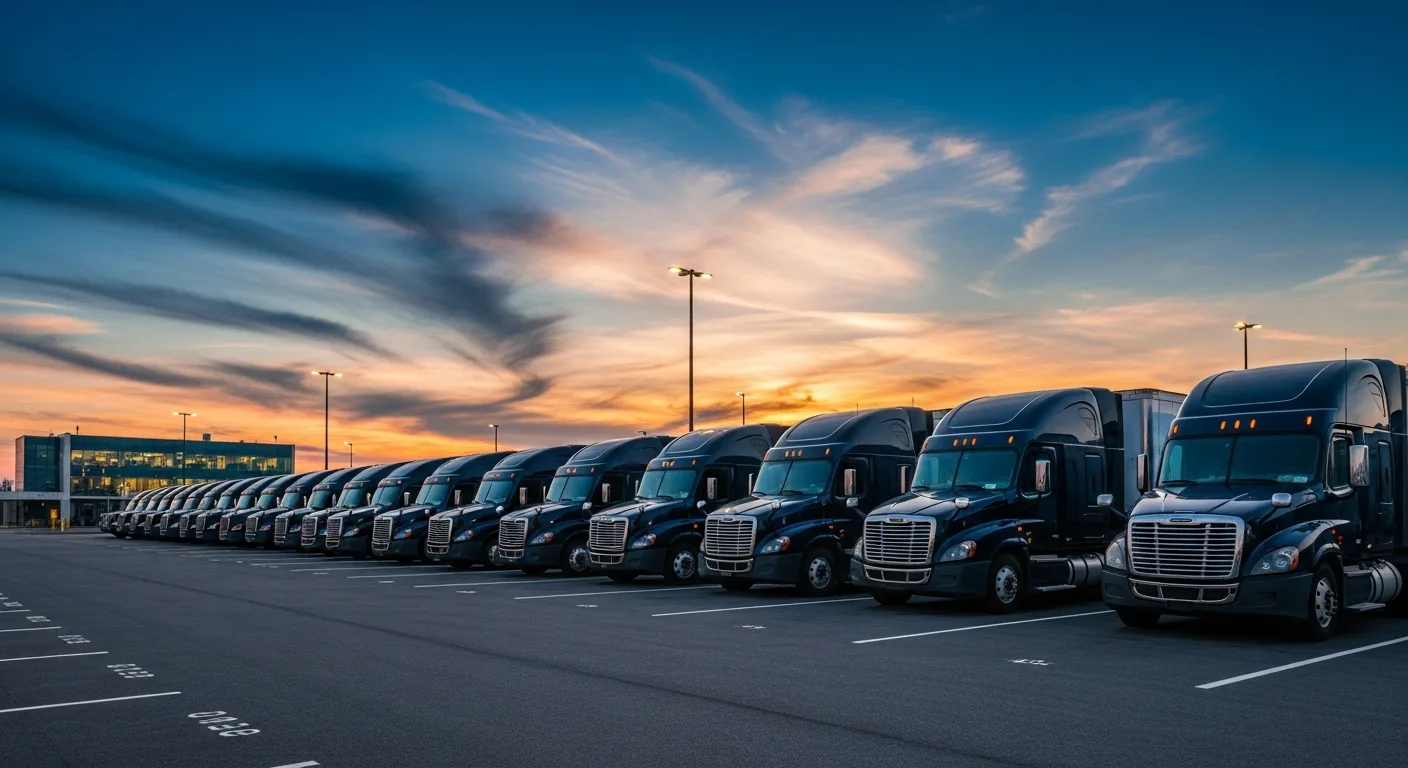
Our service trucks carry 22.5 and 24.5 commercial truck tires in steer, drive, and trailer positions in both new and quality retread options from major commercial tire manufacturers. For specialty sizes or less-common fitments, we can source and deliver within hours. Every service unit also carries valve stems, TPMS sensors, lug nuts, and wheel seal kits to handle secondary damage discovered during the replacement — so you don't need a second truck call for a failed valve stem found at the same time as the blowout. Drivers who search for semi truck tire repair near me will find our mobile team comes to their exact location on I-40, US-93, or any highway in our service area — no tow required.
Kingman-area customers can also schedule non-emergency tire replacements at our dispatch hub at 3720 N Prescott St when a highway road service call isn't needed. Fleet operators with regular Arizona–Nevada–California runs can coordinate bulk tire replacements at your terminal on a scheduled basis.
Emergency Blowout and Tire Failure Response
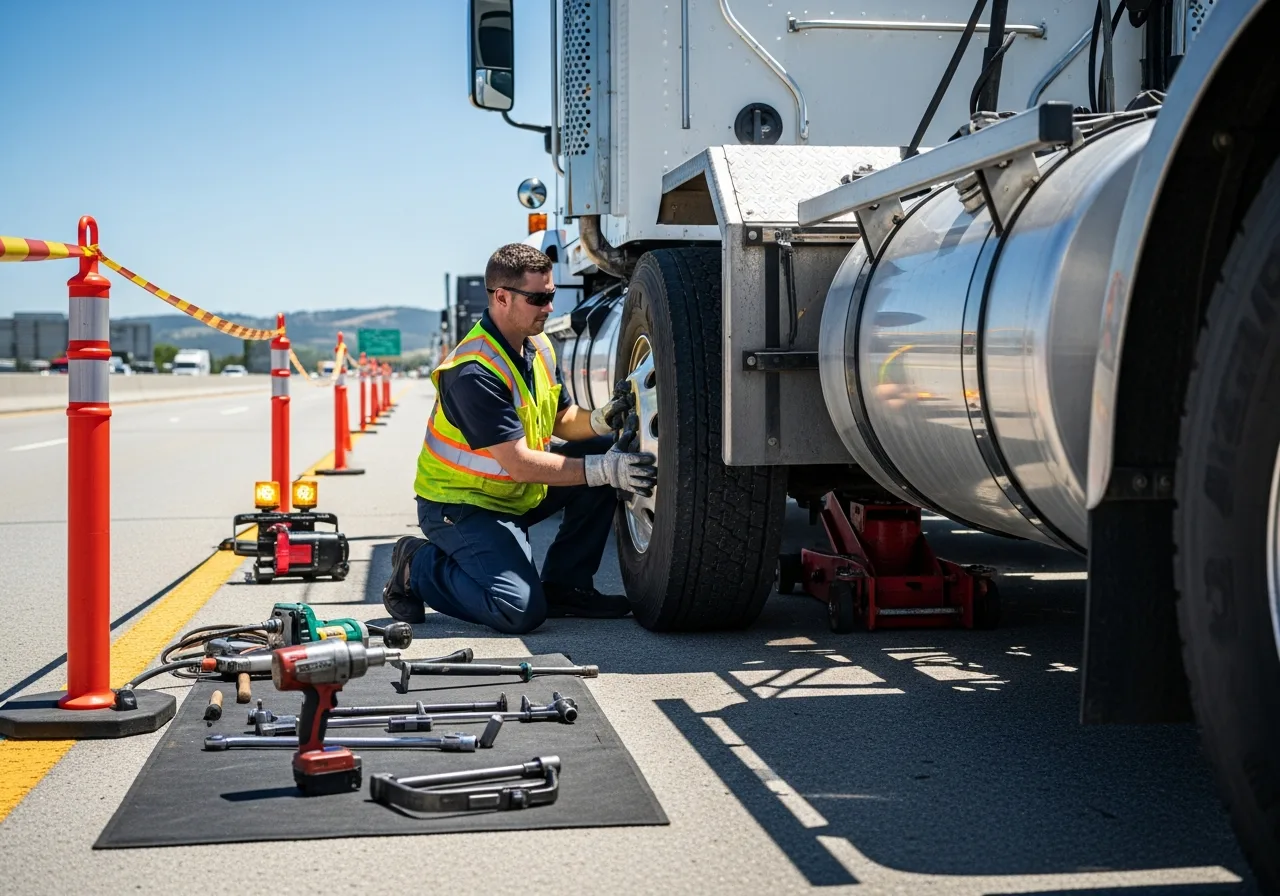
When a tire fails at highway speed, your first priority is vehicle control and a safe stop. Activate four-way flashers immediately, apply steady steering pressure without jerking the wheel, and allow the vehicle to decelerate naturally. Once stopped safely off the travel lane, set out emergency triangles at 10, 100, and 200 feet per FMCSA regulations. Then call (334) 759-7020 — a live dispatcher answers immediately and routes the nearest available service truck to your exact milepost on I-40, US-93, or any highway in our service area.
Steer Tire Failures — Life Safety Priority
A steer tire (front axle) blowout is the most dangerous tire failure on any commercial vehicle. At highway speed, a sudden steer tire failure can cause severe loss of directional control on a loaded Class 8 semi truck. Never attempt to drive on a destroyed steer tire, even to the next exit. Call for immediate roadside assistance and stay with the vehicle. Our technicians arrive with the correct steer tire fitment and perform the replacement to OEM specifications, including verified lug torque and inflation pressure, before releasing the vehicle to traffic.
Drive and Trailer Tire Blowouts, Tread Separations, and Slow Leaks
Drive and trailer axle failures are more common than steer failures and, while less immediately dangerous to vehicle control, cause significant collateral damage. Shredded rubber impacts air brake lines, ABS sensor wiring, mud flaps, and fenders. Trailer tire blowouts often go undetected by the driver for miles, causing additional damage with each wheel rotation. We respond to:
- Sidewall blowouts — road debris penetration or heat-weakened casing failure
- Tread separations — de-lamination of aged or retread casings under sustained load
- Slow flats — nail punctures, valve stem failures, or bead leaks
- Bead damage — impact damage from potholes or curb strikes breaking the bead seal
DOT Tread Depth Rules and Out-of-Service Standards
Federal regulations (FMCSA 393.75) set minimum tread depths for commercial truck tires. Tires worn below these minimums result in an out-of-service citation at any roadside inspection:
- Steer axle tires: minimum 4/32" tread depth in any two adjacent major grooves at any location
- Drive and trailer axle tires: minimum 2/32" tread depth in any two adjacent major grooves
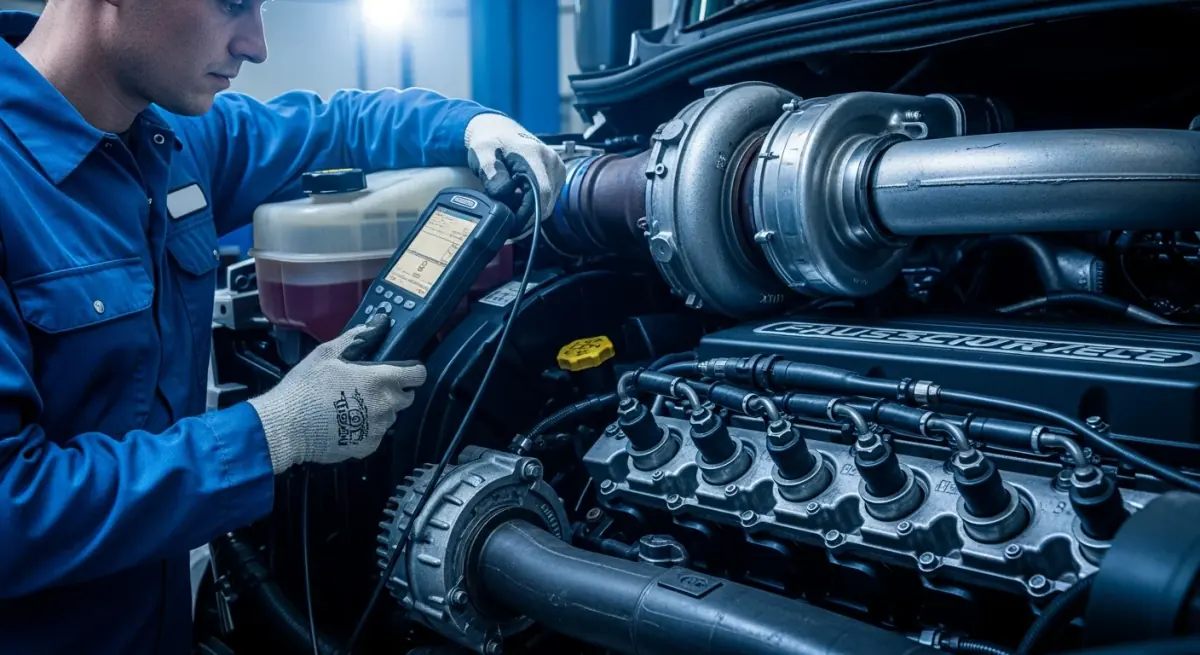
Our technicians carry calibrated tread depth gauges and inspect tread depth during every tire service. If we find a tire approaching the out-of-service threshold during a routine call, we notify you before it becomes a violation. A CSA citation for an out-of-service tire is always more expensive than a proactive replacement — and a failed tire on a loaded truck is always more expensive than a planned one. We also check tires for regroovable tread, sidewall damage, and inner liner exposure that may not be obvious from a walk-around.
Arizona Heat and Tire Degradation on I-40 and US-93
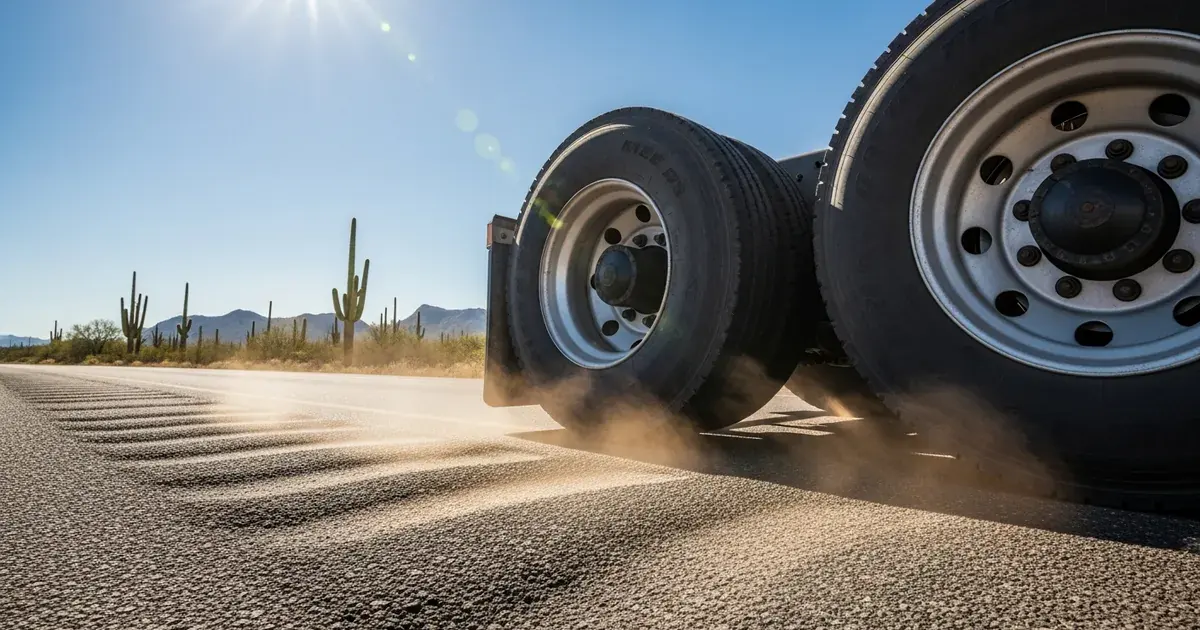
Arizona is one of the harshest environments for commercial truck tires in the country. Summer temperatures regularly exceed 110°F on the Mojave Desert grades west of Kingman, and asphalt surface temperatures can top 150°F. This extreme heat accelerates several failure modes that we respond to daily on I-40 and US-93:
- Internal heat buildup: Underinflated tires running at highway speed generate internal heat that rapidly breaks down the casing, leading to sudden sidewall failure
- Tread de-lamination: Aged casings — even those with adequate tread depth — lose elasticity and become prone to sudden tread separation under sustained high-heat load
- Retread failures: Retread casings with hidden internal damage de-laminate in extreme heat, often on long descents where brake heat compounds the problem
- Pressure creep: Cold-inflation pressure rises approximately 4–6 PSI per 10°F temperature increase — a correctly inflated cold tire can become over-pressured on a full summer day run
Checking tire pressure at a rest stop or weigh station during extreme heat days can prevent blowout emergencies. If you notice a soft tire, abnormal vibration, or handling changes on I-40 or US-93, pull off immediately and call us for immediate roadside tire service.
Valve Stems, TPMS, and Wheel Seal Inspection
Small components cause large failures when overlooked. Every tire service we perform includes inspection and service of:
- Valve stems: Cracked, corroded, or over-torqued valve stems cause slow leaks. We replace damaged valve stems as part of every tire change — a $5 part that prevents a $500 roadside call two weeks later.
- TPMS sensors: We verify TPMS sensors are functional and properly programmed on equipped vehicles. A failed sensor eliminates the early warning system for pressure loss — the first sign of a problem becomes the blowout itself.
- Wheel seal inspection: Oil leaking from a failed wheel seal can contaminate the brake drum and mask a pressure problem. We check the hub seal during every tire change and flag any leaks for immediate attention.
Tire Mounting Procedure — Torque, Inflation, and Final Walk-Around
After mounting every commercial truck tire, our technicians follow a strict completion procedure before releasing your vehicle:
- Lug nuts torqued to OEM specification using a calibrated torque wrench — final torque always verified by hand, not left to an impact gun alone
- Tire inflated to the correct cold operating PSI for the axle position and load rating
- Bead seating verified all the way around the rim — a partially seated bead will fail under load
- Wheel seal checked for leaks or contamination discovered during the change
- Final walk-around: brake chamber secure, air lines clear of the tire path, mud flaps intact, adjacent tires checked for pressure
This procedure matters because wheel-off incidents — a tire and wheel separating from the vehicle while underway — are almost always caused by improper lug torque or incorrect bead seating. We do not cut corners on the torque verification step.
Our Mobile Truck Tire Service Process
- Call (334) 759-7020 and describe the situation — blowout, flat, or scheduled replacement — along with your location and tire size if known.
- Our dispatcher confirms tire availability and routes the nearest technician with the right equipment for your vehicle and axle position.
- The technician removes the damaged tire, inspects the wheel, hub, and wheel seal for secondary damage, and mounts the replacement.
- Lug nuts are torqued to OEM spec, pressure is set to correct PSI, and a final walk-around confirms the repair is complete before you roll.
Service Area — I-40, US-93, and 200-Mile Radius from Kingman
We carry commercial truck tires on every service truck and regularly perform roadside replacements along I-40, US-93, and I-15 — reaching Las Vegas, Flagstaff, Bullhead City, Needles, and Henderson from our Kingman, AZ dispatch hub. Call for an immediate ETA from your exact location.
Frequently Asked Questions
- Do you carry commercial truck tires in stock?
- Yes. We carry a selection of popular 22.5 and 24.5 commercial truck tire sizes — steer, drive, and trailer positions in both new and quality retread options. For specialty sizes, we can source and install within hours.
- Can you repair or replace a tire on the side of the highway?
- Absolutely. Our mobile tire service units are fully equipped for roadside tire repair and replacement anywhere along I-40, US-93, and throughout our 200-mile service area from Kingman, AZ.
- How quickly can you respond to a blowout on I-40?
- For most I-40 locations between Needles and Seligman, our response time is 45–75 minutes from our Kingman dispatch hub. A live dispatcher answers every call and provides a real-time ETA.
- What causes tire blowouts on Arizona highways?
- Arizona's extreme summer heat accelerates tire degradation, especially on underinflated or aged casings. Road debris, pothole impacts, and tread separations on retread tires are also common causes on I-40 and US-93.
Related Services
- Emergency Roadside Repair
- Brake & Suspension Repair
- Axle & Bearing Repair
- Fleet Maintenance
- All truck & trailer repair services
- Free Guide: Emergency Breakdown — What to Do When Your Truck Stops Running
- All free trucking guides & resources