A breakdown is stressful, and stress leads to mistakes. The drivers who stay safe are the ones who already know the steps before anything goes wrong.
Keep this checklist in your cab. The first minutes after a breakdown are about safety — yours and everyone else's — long before they are about the repair. Work the list in order.
The First 90 Seconds
- Get off the roadway. If the truck is still moving, ease onto the shoulder or an exit — as far from traffic as possible.
- Turn on your hazard flashers immediately.
- Note your exact location: highway, direction of travel, and the nearest mile marker or exit.
- Stay calm and assess — is there smoke, fuel smell, or fire risk? If so, get clear of the vehicle.
Quick Triage: Is It Safe to Keep Driving?
Answer honestly. This is a starting point, not a substitute for a technician's inspection.
Secure the Scene and Place Warning Devices
If a qualifying commercial vehicle is stopped on the traveled portion or shoulder of a highway for a reason other than necessary traffic stops, place the required warning devices as soon as possible and no later than 10 minutes after stopping. Activate hazard warning flashers immediately and keep them operating until the devices are placed.
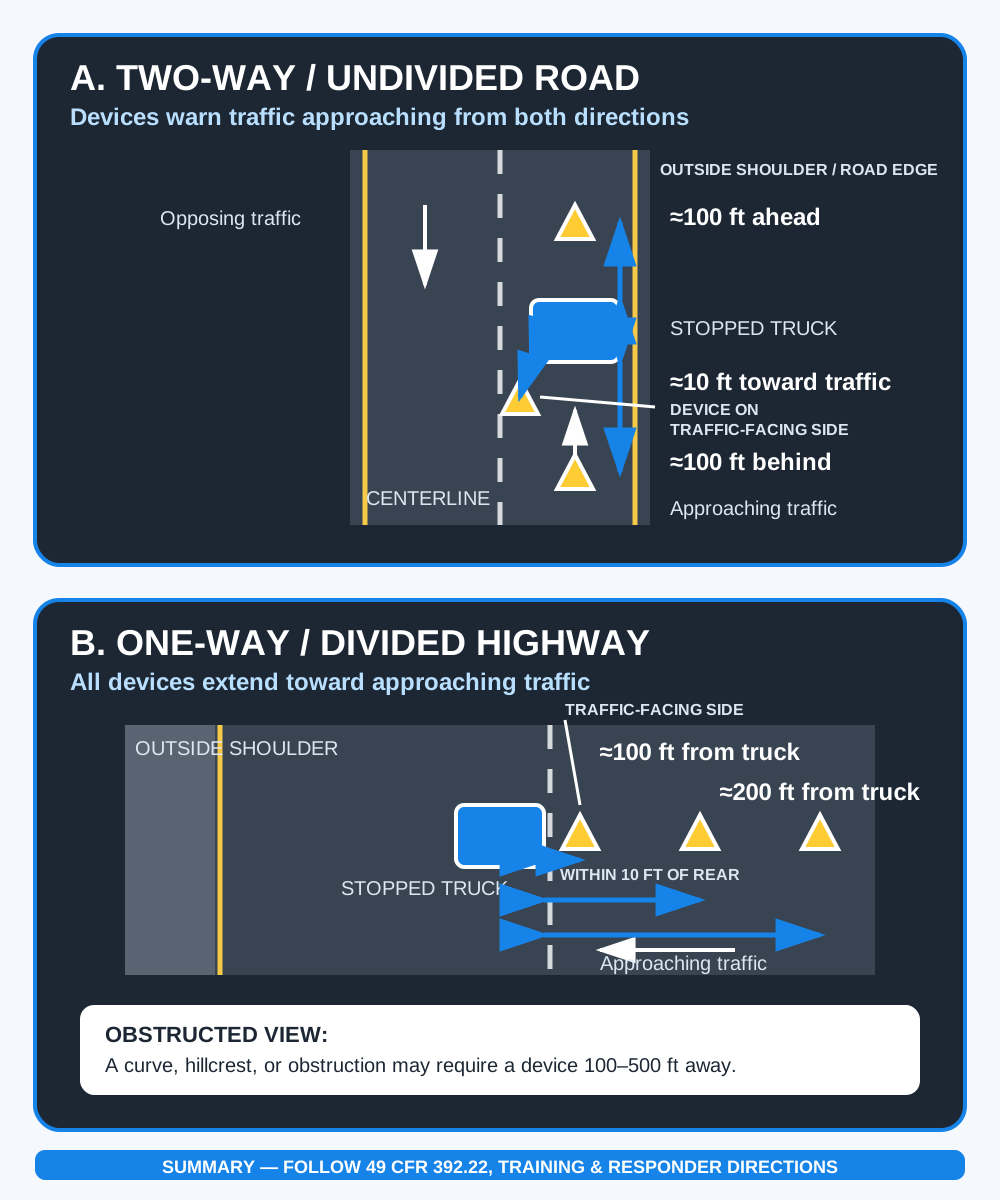
- Two-way or undivided road: place one device on the traffic side of the vehicle approximately 10 feet from it, toward approaching traffic. Place a second device approximately 100 feet ahead of the vehicle and a third approximately 100 feet behind it, centered in the traffic lane or shoulder occupied by the vehicle.
- One-way or divided highway: place one device on the traffic side within 10 feet of the rear of the vehicle. Place the other two approximately 100 feet and 200 feet toward approaching traffic, centered in the lane or shoulder occupied by the vehicle.
- Obstructed view: if the vehicle is stopped within 500 feet of a curve, hillcrest, or another obstruction that prevents approaching traffic from seeing it, place the warning device in that direction 100 to 500 feet from the vehicle so it provides ample warning.
These are summaries, not a substitute for the complete rule. Follow 49 CFR 392.22, your carrier training, and directions from law enforcement, fire, highway, or other emergency responders. Do not enter traffic or place a device where doing so would be unsafe.
Read the complete 49 CFR 392.22 rule- Wear a high-visibility vest before stepping out near traffic
- Keep wheels chocked if on any grade
- Stay out of the traffic-side blind zone at all times
Call for Help — Have This Ready
When you call for roadside repair, having this information ready gets a technician to you faster:
- Highway and direction of travel
- Nearest milepost, exit, crossroad, or landmark
- A callback number that will stay reachable
- Observed symptoms, including warning lights, sounds, smells, smoke, leaks, or tire damage
- Truck and trailer make, model, and year
- Whether the trailer is loaded and, when relevant and safe to share, the cargo type
- A map pin or GPS coordinates from your phone when it is safe to use it
Arizona milepost markers identify your route location and help dispatchers and emergency responders find you. On interstate highways, milepost numbering generally starts at the western or southern state line and increases as you travel east or north.
Read ADOT's milepost guidanceBroken down in the Weldon's service area? Call (334) 759-7020. A live dispatcher answers 24/7 and we will roll a mobile unit to your location.
What to Keep in Your Emergency Kit
- The warning devices required for your vehicle and operating conditions (commonly three bidirectional reflective triangles)
- High-visibility safety vest
- Flashlight or headlamp with spare batteries
- Basic tool kit and tire pressure gauge
- Work gloves and a rain poncho
- Drinking water (extra in desert heat) and non-perishable snacks
- Fully charged backup phone battery
- Fire extinguisher (charged and rated for the vehicle)
- First-aid kit
- Wheel chocks
Frequently Asked Questions
How far back should I place warning triangles?
Do not use one universal 10/100/200-feet-behind layout. On a two-way or undivided road, place the traffic-side device approximately 10 feet toward approaching traffic, then place devices approximately 100 feet ahead of and behind the vehicle. On a one-way or divided highway, place the traffic-side device within 10 feet of the rear, with the others approximately 100 and 200 feet toward approaching traffic. The obstructed-view rule may require a device 100 to 500 feet away. Follow the complete 49 CFR 392.22 rule, your training, and emergency-responder directions.
Should I stay with my truck after a breakdown?
Yes, unless there is a fire, fuel leak, or other immediate danger. Staying with the vehicle keeps you safer, makes you easier to find, and protects your cargo while help is on the way.
What should I do if I break down on a remote desert highway?
Pull off safely, set your flashers and triangles, stay with the vehicle, conserve water in the heat, and call for help with your exact location. Do not try to walk for help on a remote stretch in extreme temperatures.
Is it safe to keep driving with a warning light on?
It depends on the light and the symptom. Use the triage on this page as a starting point, but when in doubt, stop in a safe place and call a technician rather than risk a bigger failure or a crash.