Semi Truck Towing Cost Calculator (Tow vs. Mobile Repair)
When your truck or trailer breaks down, the fastest decision you make can be the most expensive one. A tow to the nearest shop often looks simple, but semi-truck towing fees, shop labor rates, and downtime add up fast — sometimes far more than a mobile repair unit coming to you.
This calculator compares the estimated total cost of towing your vehicle to a shop against calling a mobile repair technician to your location, factoring in distance, downtime, and typical regional towing rates.
Average Semi-Truck Towing Rates
Getting an accurate handle on semi-truck towing cost starts with understanding how tow operators actually bill a job. Nearly every heavy-duty towing company charges a flat hook-up fee just to dispatch a truck and hook onto your rig, then adds a per-mile cost for the distance from the breakdown site to the shop or yard. Waiting time, after-hours dispatch, and storage fees are billed separately and can double the final invoice if a truck sits overnight.
The table below shows typical towing rates for commercial vehicles based on data from tow operators across Arizona and Nevada. These are ballpark figures — actual towing prices vary by region, time of day, and equipment required.
| Tow Type | Hook-Up Fee | Per-Mile Rate | Typical 50-Mile Total |
|---|---|---|---|
| Light-duty (pickup/box truck) | $75–$150 | $3–$5 | $225–$400 |
| Medium-duty truck | $150–$250 | $5–$7 | $400–$600 |
| Heavy-duty (Class 8 tractor) | $250–$500 | $7–$12 | $600–$1,100 |
| Heavy-duty with loaded trailer | $350–$600 | $9–$15 | $800–$1,350 |
Note that a loaded trailer often requires a second recovery unit or a rotator, which pushes the tow cost toward the higher end of the range. Remote breakdown locations on I-40 or US-93 also add mileage on both ends of the trip, since the tow truck has to drive out to you before the return trip even starts.
What Drives Heavy-Duty Towing Prices
Heavy-duty towing is priced differently than passenger vehicle towing because the equipment, insurance, and risk involved are all higher. Several factors push towing prices up or down on any given call:
- Time of day: Nights, weekends, and holidays typically carry a 25–50% after-hours surcharge on top of the base hook-up fee.
- Equipment needed: A simple wheel-lift tow costs far less than a rotator recovery for a jackknifed rig or a rollover.
- Distance to the nearest qualified shop: Rural stretches of I-40 and US-93 can mean 60+ miles one-way, multiplying the per-mile cost.
- Loaded vs. empty trailer: A fully loaded trailer adds weight, may require load transfer, and increases liability for the tow operator.
- Storage and detention fees: If the truck can't be repaired immediately, daily storage charges accumulate at the tow yard.
- State and region: Arizona and Nevada towing rates differ from national averages due to fuel costs, insurance requirements, and driver availability.
Accident recovery calls also cost more than simple mechanical breakdowns because they often involve law enforcement coordination, debris cleanup, and specialized recovery equipment.
Tow Cost vs. Mobile Repair: Which Costs Less?
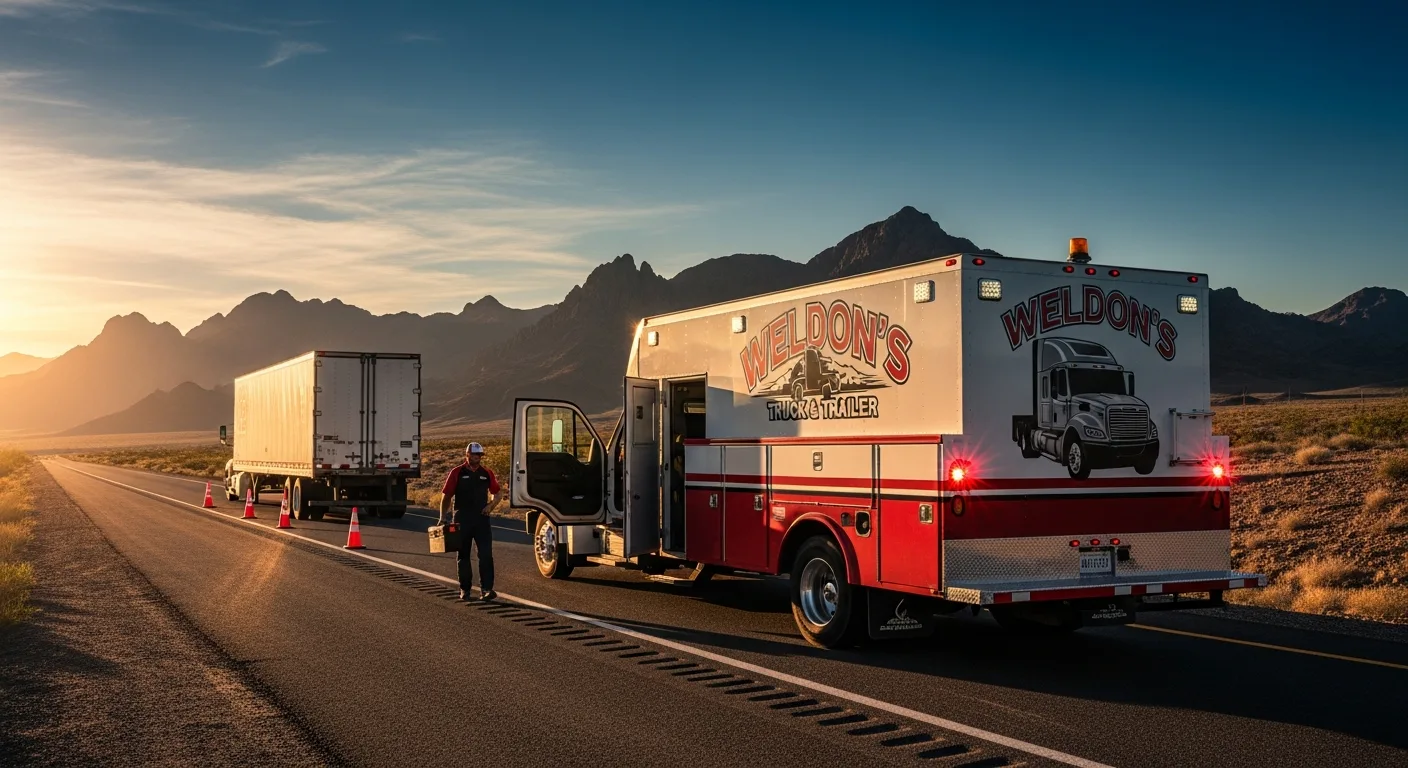
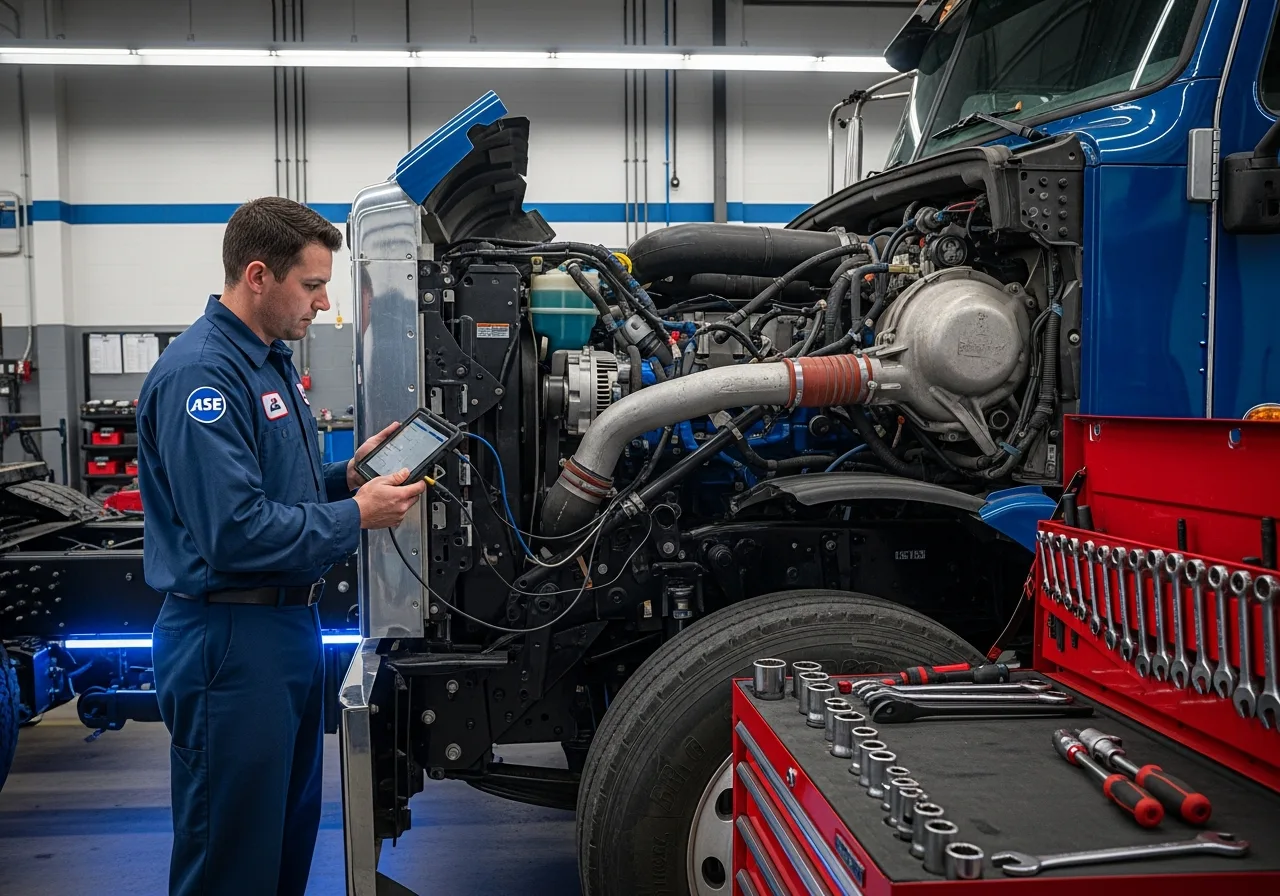
For most mechanical breakdowns — dead batteries, alternator failures, brake issues, tire blowouts, cooling system leaks — a mobile repair unit coming to you is the cheaper option once you add up the full tow cost. A tow bill isn't just the hook-up fee and mileage; it also includes the shop's diagnostic charge and the value of the downtime your truck spends waiting in a bay behind other jobs.
| Tow to Shop | Mobile Repair | |
|---|---|---|
| Dispatch / hook-up fee | $250–$500 | $0–$150 trip charge |
| Distance charge (50 mi) | $350–$600 | Included in trip charge |
| Shop diagnostic fee | $150–$250 | Included in labor |
| Downtime | Hours to days (queue) | Typically 1–3 hours on-site |
Mobile repair isn't always cheaper — major engine failures, transmission problems, or damage that requires a lift and shop-only equipment still need a tow. But for the majority of roadside calls, a mobile mechanic eliminates the towing rates entirely and gets the truck back on the road faster.
How to Avoid a Tow
The best way to control semi-truck towing expenses is to avoid needing a tow in the first place. A few habits go a long way:
- Complete a thorough pre-trip inspection every time — catching a slow leak or worn belt before it fails on the highway is far cheaper than any tow.
- Keep up with scheduled maintenance on brakes, cooling systems, and tires, since these are the most common causes of roadside breakdowns.
- Call a 24/7 mobile mechanic before calling a tow truck for anything that isn't obviously a shop-only repair — many issues that seem tow-worthy can be fixed roadside in under an hour.
- Keep basic spare parts (belts, fuses, a spare air line) in the truck for the most common failure points.
Weldon's Truck & Trailer resolves most roadside calls without a tow at all, and when a tow truly is necessary, we coordinate with trusted heavy-duty tow operators so you're not left making calls from the shoulder.