Wheel bearing failure in a semi truck or trailer is not just a breakdown — it is a potentially catastrophic safety event. When a wheel bearing fails completely, the wheel can separate from the vehicle at highway speed. A 100-pound tire and wheel assembly traveling at 65 mph becomes a deadly projectile. Understanding what causes bearing failure, recognizing the warning signs, and investing in prevention is essential for every commercial vehicle operator.
How Wheel Bearings Work
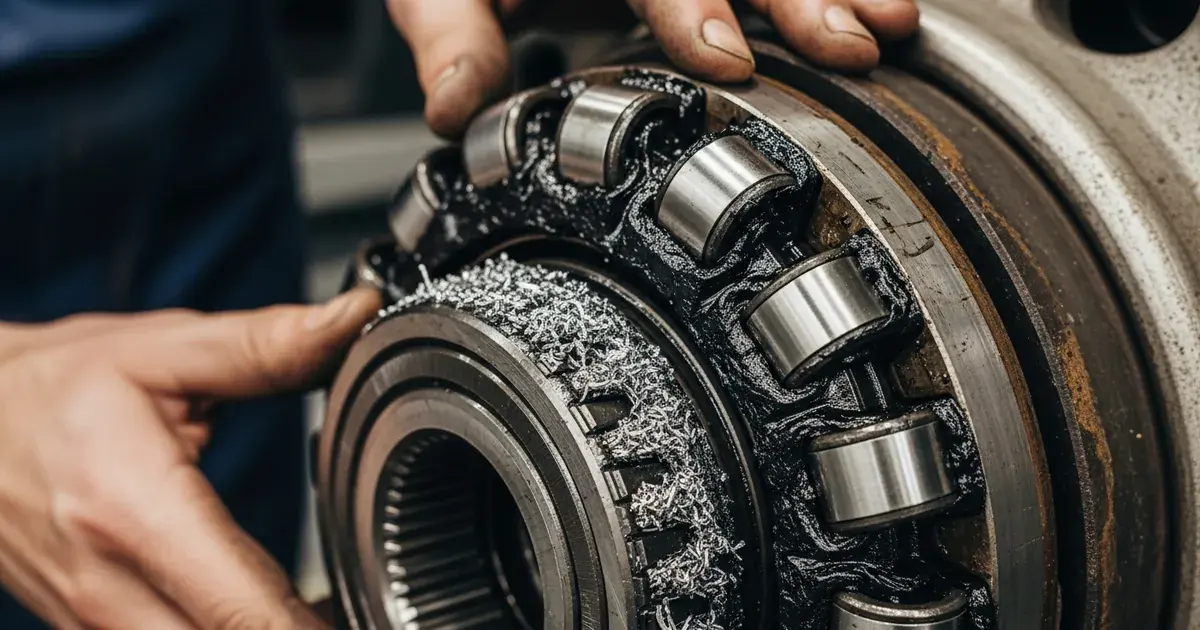
Commercial truck wheel bearings consist of a hub assembly containing an inner race and outer race — precision-machined steel rings — with tapered roller bearings between them. The bearings are packed with high-temperature grease and sealed with wheel seals to keep grease in and contaminants out. When properly maintained, truck wheel bearings can last 300,000 to 500,000 miles. When neglected, they can fail in as few as 50,000 miles.
The bearing preload — the amount of force pressing the inner and outer races together — is set during installation using a specific spindle nut torque procedure. Proper preload ensures the bearings carry the load evenly without excessive play or excessive tightness. Both conditions cause premature failure.
Top Causes of Bearing Failure
The number one cause of premature bearing failure is inadequate lubrication. Bearing grease serves three critical functions: reducing friction between the rolling elements and races, dissipating heat generated by friction, and preventing corrosion on bearing surfaces. When grease breaks down from heat, leaks out through damaged seals, or is contaminated with water or dirt, the bearing loses protection and begins to fail.
The second most common cause is improper installation. Incorrect bearing preload — whether too tight or too loose — creates abnormal wear patterns. A bearing installed too tight overheats because the rolling elements are pressed too hard against the races. A bearing installed too loose allows the hub to shift, creating impact loads that damage the rollers and races.
Other significant causes include water contamination from failed wheel seals or driving through deep water, overloading that exceeds the bearing's rated capacity, impact damage from potholes or road hazards, and heat damage from nearby brake problems including dragging brakes or overheated drums.
Warning Signs of Bearing Failure
Catching bearing failure early is critical. The warning signs progress in severity as the bearing deteriorates. The earliest sign is unusual noise — a humming, rumbling, or growling sound from a wheel position that changes with vehicle speed but not with braking. As deterioration progresses, the noise becomes louder and may develop into a grinding or clicking sound.
Heat is another early indicator. During rest stops, walk past each wheel position and feel for abnormal heat radiating from the hub area. A bearing that is significantly hotter than the others on the same axle is developing a problem. Some fleet operators use infrared temperature guns or thermal cameras during pre-trip inspections to identify bearing temperature anomalies.
Physical play in the wheel is a late-stage warning sign. If you can grasp a tire and rock it — feeling movement at the top and bottom — the bearing has excessive clearance and needs immediate attention. At this stage, failure may occur at any time.
The Real Cost of Bearing Failure
A routine bearing replacement — performed proactively during scheduled maintenance — typically costs $400 to $800 per wheel position, including parts and labor. This includes new bearings, races, seals, and grease, plus the labor to disassemble, clean, inspect, and reassemble the hub.
An emergency bearing replacement on the roadside costs significantly more — typically $800 to $1,500 due to emergency response fees, after-hours labor rates, and the premium on immediate parts availability. This is still the least expensive failure scenario.
A catastrophic bearing failure that results in wheel separation can cost $5,000 to $50,000 or more when you factor in the cost of the wheel and tire, hub and spindle damage that requires axle replacement, trailer structural damage from the wheel-off event, cargo damage or loss, towing and recovery costs, road damage liability, and potential injury claims if the separated wheel strikes another vehicle.
The financial math is clear: a $600 preventive bearing replacement is the smartest investment in your fleet's maintenance budget.
Bearing Inspection and Maintenance Schedule
For fleets operating in extreme heat environments like Arizona and Nevada, bearing inspection should occur at every major PM interval — approximately every 50,000 miles for standard operations, or every 40,000 miles for trucks operating in sustained high-heat conditions. The inspection should include removal of the hub and visual inspection of all bearing components, measurement of bearing preload and endplay, inspection of wheel seals for leaks, and checking for heat discoloration on races and rollers.
Bearing repacking with fresh grease should be performed at the same interval as inspection. Complete bearing replacement should occur at 300,000 to 400,000 miles depending on operating conditions, or whenever inspection reveals wear, pitting, or damage.
Hub Oil vs Grease-Pack Systems
Modern commercial trucks increasingly use oil-bath hub systems instead of traditional grease-pack bearings. Oil-bath hubs provide better heat dissipation and consistent lubrication, which extends bearing life significantly. However, they require their own maintenance attention — check oil level at every pre-trip inspection through the sight glass, and change hub oil at recommended intervals.
For grease-pack systems, use only high-temperature bearing grease rated for commercial vehicle applications. Standard automotive bearing grease breaks down at the temperatures generated by heavy truck operation.
For professional wheel bearing service and mobile repair, call Weldon's Truck & Trailer at (334) 759-7020. Our technicians perform complete wheel-end service at your location, including bearing replacement, seal installation, and proper preload setting.