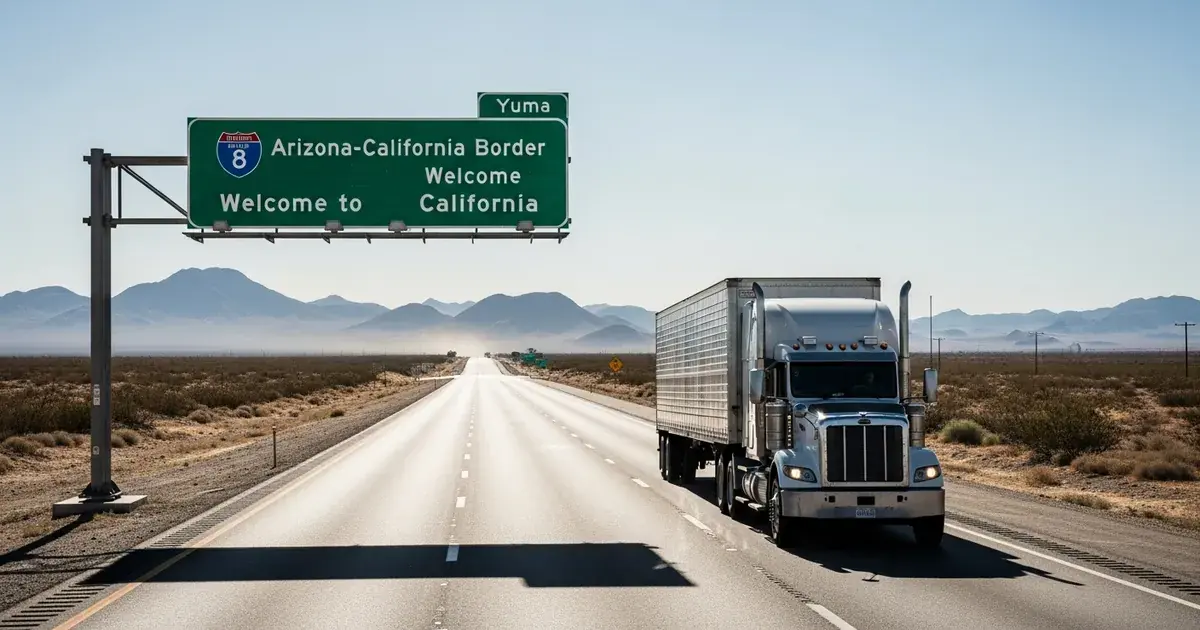
Yuma, Arizona occupies one of the most strategically important positions in the Southwest commercial trucking network. Situated at the junction of Interstate 8 and Interstate 10 in Yuma County, just minutes from the California-Arizona border, Yuma is the gateway through which a massive volume of commercial freight passes between California's ports and agricultural regions and the markets of Arizona, New Mexico, Texas, and beyond. Understanding the truck repair landscape in Yuma is essential for operators traveling this corridor.
Yuma's Position in the Freight Network
Interstate 8 runs east-west through Yuma, connecting San Diego and the Imperial Valley of California with Tucson, Arizona via Gila Bend. This route carries enormous volumes of agricultural products — the Yuma Valley is one of the most productive agricultural regions in the world, and much of winter produce consumed in the United States is grown here and shipped by truck. Refrigerated trailers carrying lettuce, citrus, dates, and other produce leave Yuma daily for distribution centers across the country.
Interstate 10, accessible via I-8 east to its junction near Gila Bend, is the primary southern transcontinental trucking route. Freight from the Port of Los Angeles and Port of Long Beach destined for Texas and the Southeast often routes through the Yuma area.
The California-Arizona border crossing on I-8 includes an agricultural inspection station operated by the California Department of Food and Agriculture. Trucks entering California must stop for inspection, and trucks with certain cargo types may be delayed or required to meet specific treatment requirements. This inspection process creates a natural bottleneck that concentrates commercial traffic in the Yuma area and occasionally causes trucks to sit in extreme heat while waiting for inspection clearance.
Extreme Heat: Yuma's Defining Challenge
Yuma consistently records some of the highest temperatures in the United States. The National Weather Service has recorded temperatures exceeding 120°F in Yuma County, and summer highs routinely exceed 115°F. With more than 300 sunny days per year and annual rainfall of less than 4 inches, Yuma's climate is classified as hyper-arid desert.
For commercial trucks, Yuma's heat creates an accelerated maintenance environment. Every fluid, belt, hose, and rubber component on the truck degrades faster in Yuma's climate than in virtually any other operating environment in the country. Tires on the I-8 corridor through Yuma County run on pavement surfaces that exceed 160°F, creating blowout conditions that are among the worst in the nation.
Trucks waiting at the agricultural inspection station are particularly vulnerable. A truck that has been sitting in direct sun for 30 to 60 minutes with the engine off will have a heat-soaked engine compartment. Restarting the engine in this condition — with coolant that has absorbed ambient heat and a radiator that has no airflow — creates a spike in operating temperature that can push marginal cooling systems over the edge.
Common Yuma Corridor Breakdowns
The breakdown pattern in the Yuma area reflects the extreme climate and the types of freight moving through the corridor. Tire failures are the most frequent emergency call, with blowouts on superheated pavement accounting for a significant percentage of all roadside service requests. The long straight stretches of I-8 through the desert encourage highway speeds, and the combination of speed, heat, and long miles between stops creates optimal conditions for tire failure.
Cooling system failures rank second, with the extreme ambient temperatures overwhelming systems that might function adequately in more moderate climates. Reefer unit failures are particularly critical in the Yuma corridor because of the high volume of temperature-controlled agricultural freight. A reefer unit that fails in 115°F heat puts the entire cargo at risk within hours.
Electrical failures from heat-damaged wiring, melted connectors, and failed batteries are the third most common category. The Yuma heat is especially destructive to electrical insulation and connector housings, which become brittle and crack from UV exposure and thermal cycling.
Agricultural Loads and Special Considerations
Trucks carrying agricultural products through Yuma face additional considerations. Fresh produce is time-sensitive — delays from breakdowns can result in rejected loads and significant financial losses. Reefer trailers must maintain strict temperature control throughout the loading, transit, and delivery process, and temperature monitoring records must show continuous compliance.
Trucks entering California from Yuma must be free of specific agricultural pests and may be required to carry certificates of treatment or origin for certain commodities. A breakdown that delays a load past its delivery window can cascade into compliance issues, rejected loads, and damaged customer relationships. This time sensitivity makes rapid repair response even more critical in the Yuma corridor.
Mobile Repair Services for Yuma County
Our service coverage extends to the Yuma corridor, providing mobile repair for trucks on I-8 and in the Yuma County area. We understand the urgency of Yuma-area breakdowns — the extreme heat creates safety urgency, and the time-sensitive nature of agricultural freight creates financial urgency.
For truckers operating near Yuma, learn about our emergency roadside repair services and how we support commercial operators throughout southern Arizona.
For emergency truck repair in the Yuma area and along the I-8 corridor, call Weldon's Truck & Trailer at (334) 759-7020. We dispatch mobile repair units equipped for desert conditions and respond with the urgency that Yuma's extreme environment demands.