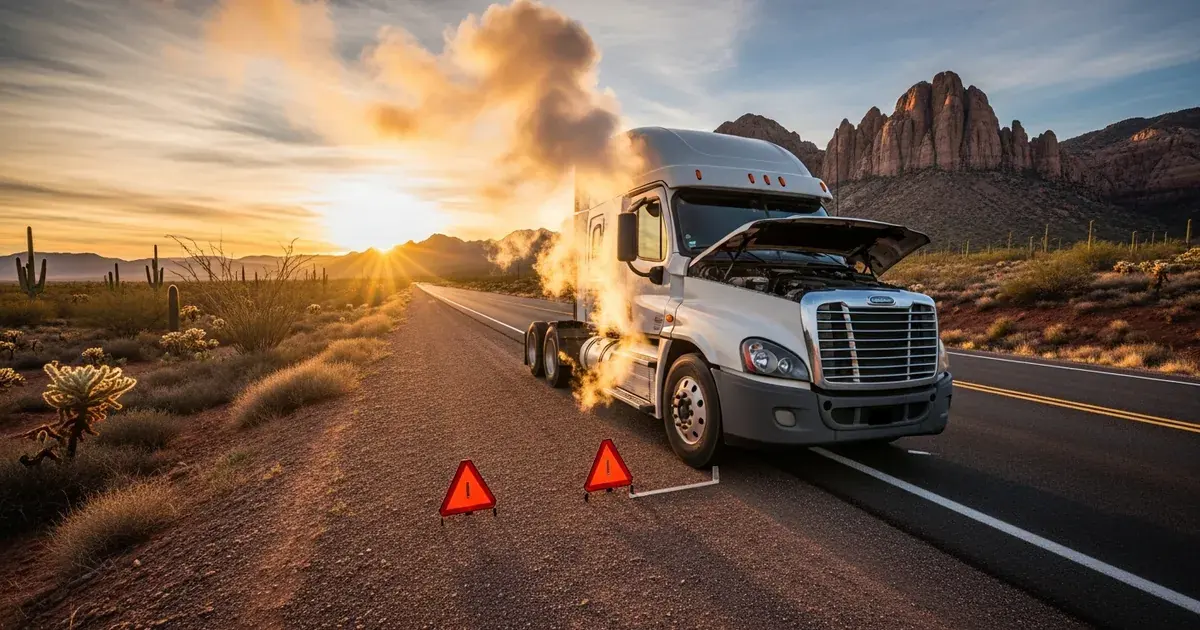
Breaking down in the desert is a unique emergency that requires preparation, calm decision-making, and knowledge of extreme heat safety. The highways through Arizona and Nevada pass through some of the most remote, hottest terrain in the United States. Summer temperatures regularly exceed 115°F, and some stretches of highway have no services for 50 miles or more. For commercial truck drivers, a breakdown in these conditions can quickly become a medical emergency if you are not prepared.
Step One: Secure Your Vehicle and Position
When your truck breaks down on a desert highway, your first priority is safety. If the engine is still running, attempt to coast to the widest available shoulder. Turn on your four-way hazard warning lights immediately. If the vehicle is disabled in a travel lane, remain in the cab with your seatbelt fastened until you can safely exit.
Once the vehicle is stopped and it is safe to exit, place your emergency triangles behind the vehicle at 10 feet, 100 feet, and 200 feet. On desert highways, visibility is usually excellent, so approaching traffic should see the triangles from a great distance. However, heat mirages can reduce visibility, making triangles even more important.
Step Two: Contact Help Immediately
Call for roadside assistance before doing anything else. Every minute in desert heat is critical. Have your exact location ready — mile markers are posted on all Arizona and Nevada highways. If you do not see a mile marker, use your phone's GPS to provide coordinates. Give the dispatcher a clear description of your problem, your truck and trailer information, and the number of people with you.
Also contact highway patrol by dialing 911 if your breakdown creates a traffic hazard or if you are in medical distress. Arizona Department of Transportation also operates courtesy patrols on I-40 and I-10 that can provide basic assistance.
Step Three: Stay With Your Vehicle
In the desert, your truck is your best survival shelter. The cab provides shade, and the air conditioning may still work even if the engine has mechanical problems. Never leave your vehicle to walk for help. The distances between services in the desert are deceptive — what looks like a short walk can be five or ten miles. Walking in 115°F heat without adequate water is a medical emergency waiting to happen.
Your vehicle is also much easier for rescuers to spot than a person on foot. Highway patrol and roadside assistance teams look for vehicles, not pedestrians. Stay with the truck.
Step Four: Manage Your Body Temperature
Dehydration and heat stroke are the primary medical threats during a desert breakdown. The human body can lose one to two quarts of water per hour through sweating in extreme desert heat. Without replacement, dangerous dehydration can occur within two to three hours.
Keep at least one gallon of water per person in your cab at all times when traveling through desert regions. Sip water regularly rather than waiting until you feel thirsty — by the time you feel thirst, you are already significantly dehydrated. If your cab air conditioning is not working, open windows on the shaded side of the vehicle to create airflow. Wet a cloth and drape it around your neck to accelerate cooling through evaporation.
Step Five: Protect Yourself from Sun Exposure
Even inside the cab, sun exposure through the windshield and windows can cause sunburn and contribute to heat-related illness. Use sun visors, towels, or clothing to shade yourself if direct sun is entering the cab. If you must exit the vehicle, wear a hat and light-colored clothing. Long sleeves, counterintuitively, protect against sun exposure and can actually keep you cooler than short sleeves by preventing direct UV contact with skin.
Avoid unnecessary physical activity while waiting for help. Every movement generates body heat and accelerates fluid loss. Rest in the shade of your vehicle and conserve energy.
Essential Desert Emergency Supplies
Every trucker operating in the desert Southwest should carry a dedicated emergency kit. The kit should include at minimum two gallons of drinking water per person, a battery-operated or hand-crank fan, electrolyte replacement packets or sports drinks, emergency food rations that do not require refrigeration, a first aid kit with sunburn treatment and a wide-brimmed hat, sunscreen, a reflective emergency blanket for shade creation, a charged portable phone charger, a flashlight with extra batteries, and emergency triangles and reflective vest.
This kit should be checked and restocked every month. Water in particular should be rotated regularly because plastic water containers can degrade in extreme heat, causing the water to develop an unsafe taste and potentially leach chemicals.
Understanding Heat-Related Illness
Know the signs of heat exhaustion and heat stroke. Heat exhaustion symptoms include heavy sweating, weakness, nausea, dizziness, headache, and cool clammy skin. If you experience these symptoms, move to shade, drink water, and apply cool water to your skin.
Heat stroke is a life-threatening emergency. Symptoms include hot and dry skin with no sweating, confusion, loss of consciousness, and body temperature above 104°F. If you or a passenger shows signs of heat stroke, call 911 immediately. This is a medical emergency that requires hospital treatment. While waiting for medical help, cool the person by any means available — wet cloths, fanning, and moving to shade.
When Help Arrives
When your roadside assistance arrives, let the technician assess the situation completely before discussing repair options. A thorough diagnosis prevents repeated breakdowns. If the repair cannot be completed on-site, discuss towing options and costs before agreeing to a tow. Get clear pricing and destination information in writing.
For 24/7 emergency roadside repair in the desert Southwest, call Weldon's Truck & Trailer at (334) 759-7020. We respond quickly because we understand that time is critical in extreme heat conditions.