Trailer damage is inevitable in commercial trucking. Dock impacts, road debris, overloading, and metal fatigue from thousands of miles of vibration all take their toll on trailer structures. When damage occurs, fleet operators and owner-operators face a critical decision: should the damaged component be repaired through welding, or does it need full replacement? Making the wrong choice can result in either wasting money on unnecessary replacement or, worse, creating a safety hazard by welding a component that should have been replaced.
Understanding Structural vs Non-Structural Components
The first factor in the weld-versus-replace decision is whether the component is structural. Structural components bear loads and maintain the trailer's integrity under stress. These include main rails, crossmembers, frame members, landing gear mounting brackets, suspension mounts, and coupling assemblies. Non-structural components include cosmetic panels, fenders, mud flaps brackets, and exterior trim.
For non-structural components, welding is almost always the preferred repair. It is faster, less expensive, and produces a serviceable result. For structural components, the decision requires more careful analysis.
When Welding Is the Right Choice
Welding is appropriate for structural repairs when the damage is localized to a small area, the surrounding metal is sound and not affected by widespread corrosion, the component is not subject to repeated cyclical stress at the repair location, the weld can be performed using proper techniques that maintain the component's original strength, and the repair meets American Welding Society (AWS) standards for structural welding.
Examples of good welding repairs include small cracks in crossmembers caught early before they propagate, localized frame damage from a single impact event, broken mounting brackets that can be rewelded with proper reinforcement, and floor patches where the surrounding floor structure is still sound.
When Replacement Is Necessary
Replacement is the better choice when the damage involves widespread metal fatigue from years of stress cycling, the heat-affected zone from welding would compromise adjacent critical areas, corrosion has reduced the wall thickness of the component below safe limits, the component has already been welded multiple times — each subsequent weld further weakens the surrounding metal, the repair location is a high-stress area subject to constant vibration, or regulatory requirements mandate replacement rather than repair.
Common components that should typically be replaced rather than repaired include axle assemblies with structural damage, severely corroded crossmembers with less than 50 percent remaining wall thickness, cracked main rails in high-stress zones near the fifth wheel plate, and spring hangers and suspension mounting brackets with fatigue cracking.
The Welding Process for Trailer Repairs
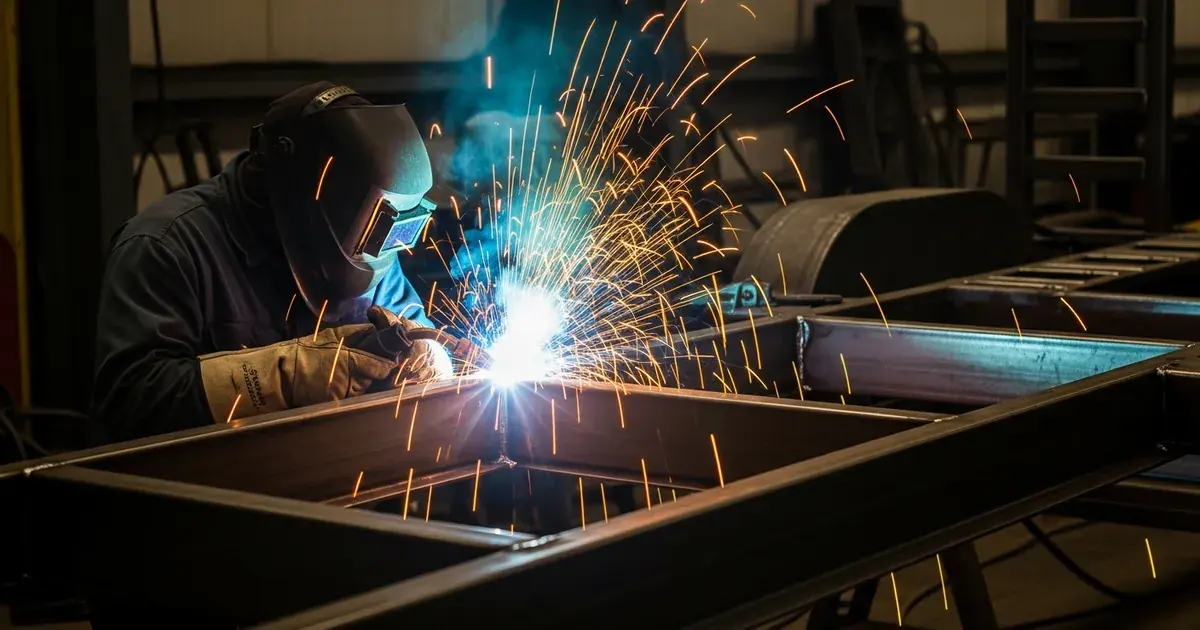
Proper trailer welding requires more than just joining two pieces of metal. The process begins with thorough preparation. The damaged area must be cleaned to bare metal. Any rust, paint, or contamination must be removed because contaminants cause weld porosity and weakness. Cracks must be drilled at each end to prevent propagation, then ground into a V-groove to allow full weld penetration.
For steel trailers, MIG welding with appropriate wire and shielding gas is the standard approach. For aluminum trailers, TIG welding provides the cleaner heat input and better control needed for aluminum's different thermal properties. Our mobile welding units carry both MIG and TIG equipment to handle either material.
After welding, the repair should be inspected visually for proper bead appearance, undercut, and porosity. Critical welds on structural components should be tested using dye penetrant or magnetic particle inspection to verify no subsurface defects exist.
Heat-Affected Zone Considerations
Every weld creates a heat-affected zone (HAZ) — an area surrounding the weld where the base metal's properties have been changed by the welding heat. In the HAZ, the metal may be harder and more brittle than the original material, or it may be softened depending on the alloy. Understanding the HAZ is critical for structural repairs because it determines whether the repair is actually stronger or weaker than the original component.
For carbon steel trailers, proper welding technique minimizes HAZ issues. For high-strength low-alloy steels and aluminum, preheating and controlled cooling rates may be necessary to maintain material properties. Our welders understand these metallurgical considerations and adjust their technique based on the specific material being repaired.
Cost Analysis: Weld vs Replace
The direct cost of welding a trailer component is typically 30 to 60 percent less than full replacement. However, the true cost comparison must include downtime during the repair, the expected remaining life of the welded repair versus a new component, the risk of failure if the welded repair does not hold, and potential DOT inspection issues if the repair does not meet standards.
In many cases, welding a damaged crossmember takes one to two hours and costs a few hundred dollars, while replacing the crossmember requires removing and reinstalling adjacent components and may take a full day. For fleet operators tracking cost per mile, the welding repair often provides better value when the component is suitable for welding.
Safety Considerations and Liability
Structural trailer repairs directly affect safety. A failed weld on a crossmember can cause the trailer floor to collapse under load. A cracked main rail repair that does not hold can result in structural failure at highway speed. These are not theoretical risks — they happen when repairs are performed improperly or when welding is attempted on components that should have been replaced.
Always use a qualified welder with commercial vehicle repair experience for structural trailer work. Ask about their welding certifications and their process for evaluating whether a component is suitable for welding repair.
For professional trailer welding assessment and repair, call Weldon's Truck & Trailer at (334) 759-7020. Our mobile welding units come to your location, evaluate the damage, and provide honest recommendations on whether to weld or replace.