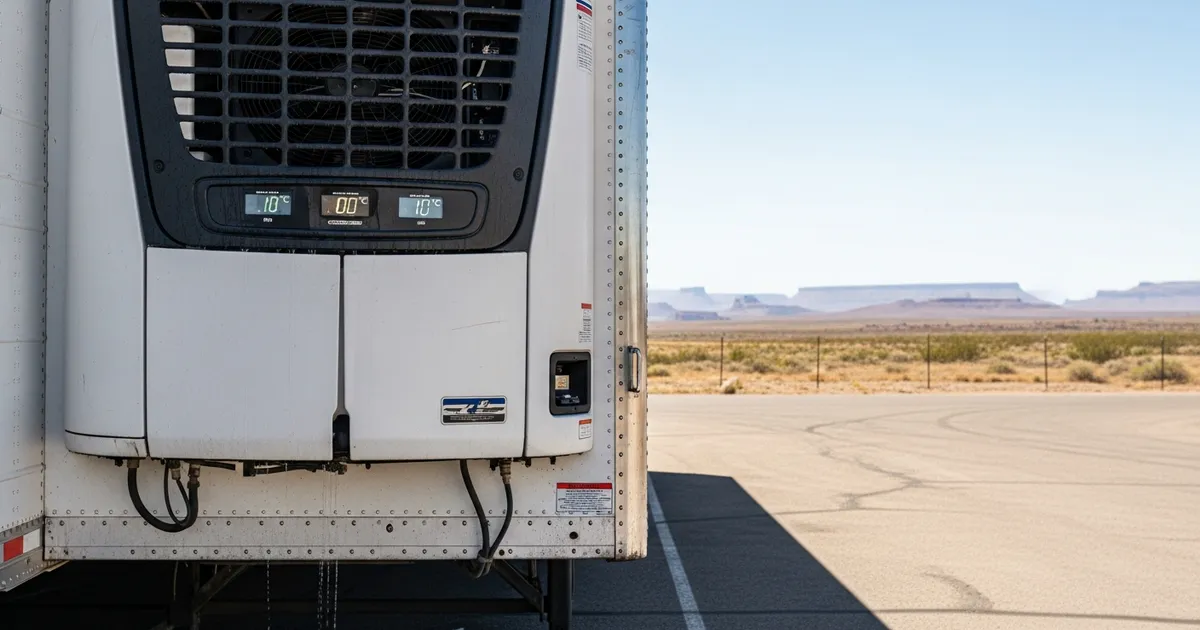
Transport refrigeration units (TRUs) face their most demanding operating conditions in the desert Southwest. When ambient temperatures exceed 110°F, a reefer unit must work continuously at maximum capacity to maintain the cargo temperature setpoint. This sustained maximum-output operation accelerates wear on every component in the system — from the diesel engine that powers the unit to the compressor, condenser, evaporator coil, and refrigerant system. Understanding how desert heat affects reefer trailers and implementing a desert-specific maintenance program can prevent costly cargo losses and unplanned downtime.
How Desert Heat Affects TRU Performance
A transport refrigeration unit is designed to maintain a temperature differential between the inside of the trailer and the ambient outside temperature. In moderate climates where outside temperatures range from 60°F to 90°F, maintaining a 35°F cargo temperature requires the unit to overcome a 25°F to 55°F differential. In the Arizona or Nevada desert at 115°F, the differential jumps to 80°F — meaning the unit must work roughly 50 percent harder to maintain the same setpoint.
This increased workload has cascading effects throughout the TRU system. The compressor runs at higher discharge pressures, generating more heat and accelerating bearing and valve wear. The condenser must reject more heat to the already-hot ambient air, reducing its efficiency. The diesel engine that powers the unit runs at higher loads for longer periods, consuming more fuel and requiring more frequent oil changes. Every component in the system ages faster in desert conditions.
For units manufactured by Carrier Transicold and Thermo King — the two dominant brands in the transport refrigeration market — the manufacturer's recommended maintenance intervals assume moderate operating conditions. Fleet operators running reefer trailers through the desert Southwest should reduce these intervals by 25 to 30 percent to compensate for the accelerated wear.
Condenser Maintenance: The Critical Priority
The condenser is the component most directly affected by extreme heat. Its job is to reject the heat absorbed from the cargo space by converting high-pressure refrigerant gas into liquid. In desert conditions, the condenser faces a double challenge: the temperature differential for heat rejection is smaller because the ambient air is already hot, and the unit must reject more heat because the cooling load is higher.
Condenser coil cleanliness is paramount. Desert environments deposit dust, sand, insects, and debris on condenser fins, reducing airflow and heat transfer efficiency. A condenser coil that is 25 percent blocked by debris can reduce unit capacity by 15 to 20 percent — enough to prevent the unit from reaching setpoint on a hot day. Clean the condenser coil at every PM interval using low-pressure water or compressed air. Direct the cleaning spray from the inside out to push debris off the coil rather than deeper into the fins. Inspect condenser fans for proper rotation speed, bearing wear, and blade damage.
Evaporator Coil Care
The evaporator coil inside the trailer absorbs heat from the cargo space. In desert operations, the evaporator runs continuously at maximum capacity, which increases the rate of ice formation on the coil surface. Excessive frost buildup insulates the coil and reduces its ability to absorb heat, forcing the unit to work even harder.
Verify that the automatic defrost cycle is functioning correctly at every PM visit. The defrost system should activate at regular intervals and should completely clear frost from the coil surface before returning to cooling mode. If the defrost cycle is not clearing the coil completely, check the defrost heater elements for continuity, verify the defrost timer settings, and inspect the drain system for blockages that could allow meltwater to re-freeze on the coil.
Refrigerant Charge and System Integrity
Maintaining proper refrigerant charge is critical for TRU performance in extreme heat. A system that is 10 percent low on refrigerant may perform adequately in moderate temperatures but will struggle to maintain setpoint when ambient temperatures exceed 100°F. Low refrigerant charge reduces system capacity, increases compressor discharge temperatures, and can lead to compressor failure from inadequate cooling of the compressor motor windings.
Check refrigerant charge at every PM interval by verifying superheat and subcooling values against manufacturer specifications. Inspect all refrigerant line connections, flare fittings, and Schrader valves for leaks using an electronic refrigerant leak detector. Even a small leak that loses a few ounces per month will accumulate into a significant charge deficit over a desert summer.
Inspect the refrigerant sight glass during operation. A clear sight glass with no bubbles indicates adequate charge. Persistent bubbles in the sight glass indicate low charge or system contamination. A completely clear sight glass with abnormally high subcooling may indicate overcharge, which reduces efficiency and can damage the compressor.
Engine and Drive System Maintenance
The diesel engine that powers most transport refrigeration units requires the same attention to heat-related maintenance as the truck's main engine. Check engine oil level and condition at every pre-trip inspection. Desert heat breaks down engine oil faster, and the continuous high-load operation typical of desert reefer runs accelerates oil degradation. Reduce oil change intervals by 20 to 25 percent compared to manufacturer recommendations for temperate climate operation.
The engine cooling system on the TRU is separate from the trailer's refrigeration system and serves only to cool the TRU engine. Inspect the engine radiator for debris blockage, check coolant level and condition, and verify thermostat operation. An overheating TRU engine will shut down automatically, immediately jeopardizing the cargo temperature.
Belt condition is especially important for TRU engines. The drive belt connects the engine to the compressor, alternator, and water pump. A belt failure stops all TRU functions simultaneously. Inspect belts for cracking, glazing, and proper tension at every PM visit, and replace any belt showing signs of heat degradation.
Door Seal and Insulation Integrity
The reefer trailer's insulation and door seals are the first line of defense against desert heat infiltration. Damaged insulation or worn door gaskets allow hot ambient air to leak into the cargo space, increasing the cooling load on the TRU. Over time, this forces the unit to work harder, consume more fuel, and wear faster.
Inspect door gaskets for compression set — the permanent deformation that reduces their sealing effectiveness. Close the trailer doors and look for visible light gaps between the gasket and the door frame. Any visible light indicates a seal failure that is allowing hot air infiltration. Replace door gaskets that show compression set, tearing, or hardening from UV exposure.
Check the trailer body for damage that may have compromised the insulation — dents, punctures, or repair patches that do not provide the same insulation value as the original foam-core panels. Areas of visible condensation on the trailer exterior on humid mornings indicate insulation failures where cold interior air is reaching the outer skin.
Pre-Trip Reefer Checklist for Desert Routes
Before loading a reefer trailer for a desert route, perform a comprehensive TRU check. Pre-cool the trailer to setpoint before loading — this reduces the initial cooling load and gives the TRU a head start before encountering extreme heat. Verify that the unit maintains setpoint with the doors closed for at least 30 minutes. Check fuel level and top off before departure — desert reefer runs consume significantly more fuel than moderate-climate runs. Confirm that the continuous monitoring system is functioning and that temperature alarms are properly configured.
For professional reefer trailer repair and maintenance or to learn more about desert operations, see our guide on refrigerated trailer maintenance for desert operations.
For emergency TRU repair and reefer trailer service, call Weldon's Truck & Trailer at (334) 759-7020. We understand the urgency of temperature-controlled cargo and respond quickly to reefer breakdowns.