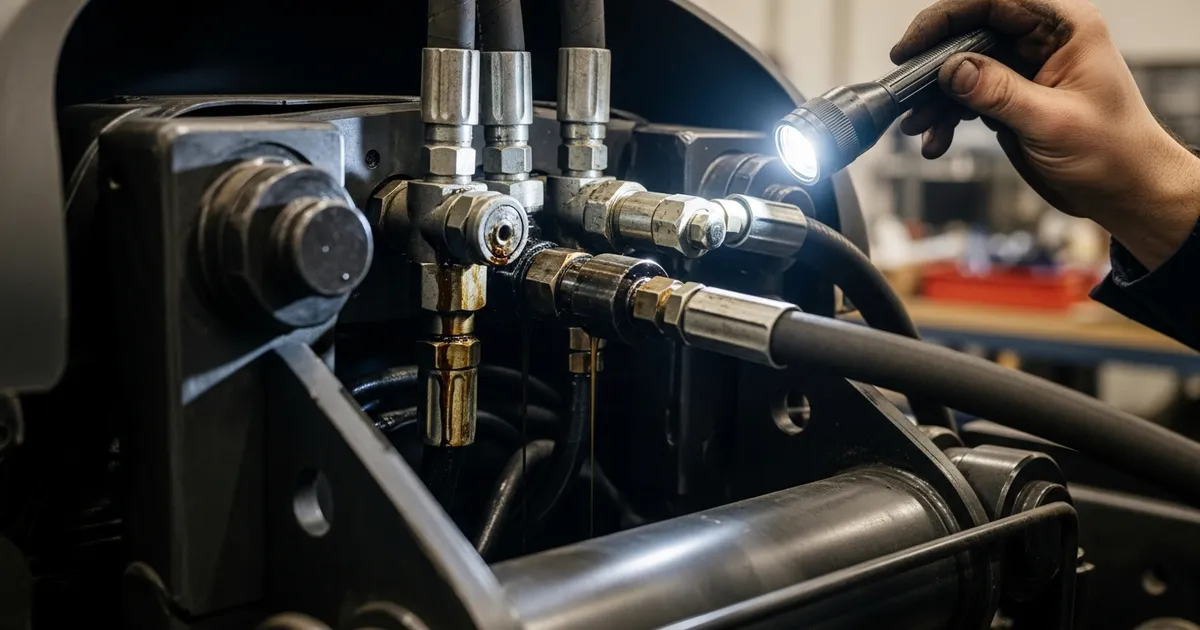
Hydraulic systems power some of the most critical functions on commercial trucks and equipment — dump bodies, liftgates, cranes, outriggers, and PTO-driven accessories all depend on properly functioning hydraulic systems. When a hydraulic system fails, work stops. Recognizing the warning signs of impending failure gives you the opportunity to schedule repairs proactively rather than dealing with an emergency breakdown at the worst possible time.
Warning Sign 1: Unusual Noises
A healthy hydraulic system operates with a steady, consistent hum from the hydraulic pump. Changes in sound pattern are early indicators of developing problems. A whining or high-pitched noise from the pump usually indicates cavitation — the pump is not receiving enough fluid, and air bubbles are forming and collapsing inside the pump. Cavitation rapidly destroys pump components and must be addressed immediately by checking fluid level, inspecting suction lines for leaks, and verifying the reservoir is properly vented.
A knocking or banging noise during cylinder operation suggests air in the system. Air trapped in hydraulic fluid compresses differently than liquid, causing erratic movement and impact forces that damage seals and valves. The system needs to be bled to remove trapped air, and the source of air ingestion must be identified and corrected.
Grinding noises indicate metal-on-metal contact inside the pump, motor, or cylinder. This typically means a bearing failure, worn gear teeth, or internal component breakdown. If you hear grinding, stop operating the system immediately to prevent catastrophic damage.
Warning Sign 2: Slow or Weak Operation
When a dump body that used to raise in 15 seconds now takes 30 seconds, or a liftgate that once handled 2,500 pounds now struggles with 1,500, the system is telling you something is wrong. Slow operation is typically caused by internal leaks that divert hydraulic pressure away from the working cylinder. These internal leaks can occur in the hydraulic pump itself as gear or vane clearances increase, inside cylinders where worn seals allow fluid to bypass the piston, in control valves where worn spools allow cross-port leakage, and in relief valves that are opening at too low a pressure.
Internal leaks are especially insidious because they may not produce any visible fluid loss. The system's fluid level stays normal, but performance degrades progressively until the system can no longer do its job.
Warning Sign 3: Excessive Heat
Hydraulic fluid should operate between 100°F and 180°F under normal conditions. When fluid temperature consistently exceeds 180°F, the fluid's hydraulic fluid viscosity breaks down, accelerating wear on every component in the system. Touch the hydraulic reservoir after normal operation — if it is too hot to keep your hand on, the fluid temperature is likely excessive.
Common causes of hydraulic overheating include operating with low fluid level which reduces the system's heat dissipation capacity, contaminated fluid with increased internal friction, a clogged or undersized cooler, relief valve set too low causing constant bypass flow, and excessive system pressure from a stuck valve or blocked line.
Warning Sign 4: Visible Fluid Leaks
Any visible hydraulic fluid leak demands attention. Even a small drip indicates a seal, hose, or fitting failure that will worsen over time. Common leak locations include hose fittings and connections where vibration loosens joints, cylinder rod seals where the piston rod enters and exits the cylinder body, pump shaft seals, hydraulic hose burst at weak points in the hose body, and reservoir filler cap and drain plug seals.
A hydraulic hose operates at extremely high pressure — typically 2,000 to 5,000 PSI depending on the application. A pinhole leak in a pressurized hose can create a stream of fluid with enough force to penetrate skin. Never use your hand to check for leaks in pressurized lines. Use a piece of cardboard or paper to detect leaks safely.
Warning Sign 5: Erratic or Jerky Movement
Smooth, controlled movement is the hallmark of a properly functioning hydraulic system. When cylinder movement becomes jerky, stops and starts, or moves in uneven increments, the system has a problem. Erratic movement can be caused by air in the system creating compressible pockets, a failing control valve that cannot regulate flow smoothly, contaminated fluid with particles interfering with valve operation, and worn cylinder seals allowing intermittent bypass.
Warning Sign 6: Foamy or Discolored Fluid
Check your hydraulic fluid regularly by pulling the reservoir dipstick or checking the sight glass. Healthy hydraulic fluid is clear and amber-colored. Milky or cloudy fluid indicates water contamination — even small amounts of water cause corrosion, seal degradation, and reduced lubrication. Foamy fluid indicates air entrainment, which causes cavitation and erratic operation. Dark or burnt-smelling fluid has been overheated and has lost its protective properties.
Any of these fluid conditions requires immediate attention. Contaminated fluid should be flushed and replaced, and the source of contamination must be identified and corrected.
Preventive Hydraulic Maintenance
The best defense against hydraulic failure is a regular maintenance program. Change hydraulic fluid and filters at manufacturer-recommended intervals or sooner if operating in extreme conditions. Inspect all hoses for cracks, abrasion, and fitting tightness at every PM visit. Check cylinder rods for scoring, pitting, and seal leaks. Monitor pump and motor operation for changes in noise, speed, or temperature. Keep the reservoir properly filled and the breather cap clean and functioning.
For hydraulic system diagnosis and mobile repair, call Weldon's Truck & Trailer at (334) 759-7020. Our mobile service trucks carry portable hose-making equipment, hydraulic fluid, and diagnostic tools to handle most hydraulic repairs at your location.