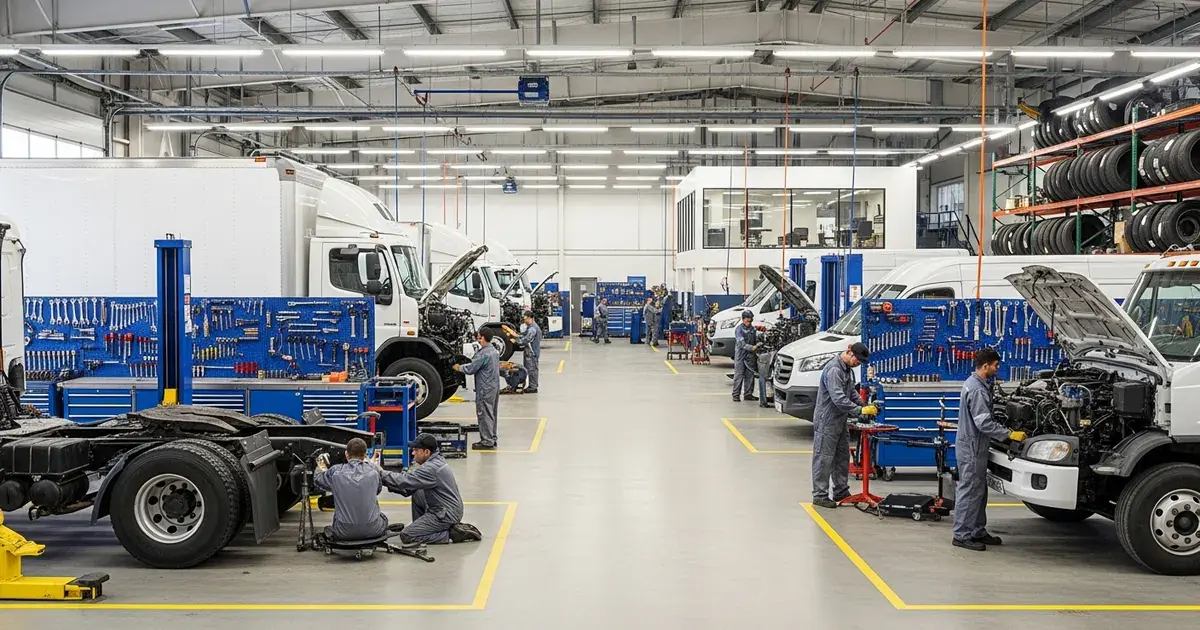
The difference between a profitable fleet and a struggling one often comes down to maintenance discipline. Unplanned breakdowns cost the average fleet $750 to $1,200 per incident in direct repair costs, but the true total cost of ownership (TCO) impact is much higher when you factor in lost revenue, missed deliveries, towing costs, driver wages during downtime, and the cascading effect on schedule commitments. A well-designed preventive maintenance program can reduce unplanned breakdowns by 50 to 70 percent, transforming maintenance from a cost center into a competitive advantage.
Building Your PM Schedule Framework
Every fleet maintenance schedule starts with the manufacturer's recommended service intervals, then adjusts based on operating conditions. Standard PM intervals for Class 8 trucks typically follow an A-B-C structure. The A service is a basic inspection and fluid check performed every 10,000 to 15,000 miles. The B service adds oil and filter changes and is typically performed every 25,000 to 30,000 miles. The C service is a comprehensive inspection of all systems and components, performed every 50,000 to 60,000 miles.
However, these standard intervals assume moderate operating conditions. If your fleet operates in extreme environments — such as the desert Southwest — you should shorten these intervals by 15 to 25 percent. Extreme heat accelerates fluid degradation, belt and hose wear, and component fatigue across every system.
Oil Analysis: Your Early Warning System
Oil analysis is the single most cost-effective diagnostic tool in fleet maintenance. A $25 oil sample analyzed by a qualified laboratory can detect engine wear, coolant contamination, fuel dilution, and additive depletion months before these conditions cause a failure. Trending oil analysis data over time reveals patterns that allow you to predict failures and schedule repairs proactively.
Establish a consistent oil sampling protocol. Sample from the same port each time, use the same laboratory for consistency, and track results over multiple samples to identify trends. Key indicators to watch include iron and copper levels for engine wear, silicon for air filtration issues, sodium and potassium for coolant leaks, and fuel dilution percentage.
Coolant Testing and Cooling System Maintenance
Coolant testing is equally important, especially for fleets operating in extreme heat. Test coolant at every B service for freeze point protection, pH level, and supplemental coolant additive (SCA) concentration. Desert operations degrade coolant faster, so your target pH range should be tighter — between 8.5 and 10.5 for conventional coolants.
Inspect the entire cooling system at every PM visit. Check hose condition, clamp tightness, radiator cap seal, water pump weep hole for leaks, and thermostat operation. A cooling system failure in 115°F heat can destroy an engine in minutes.
Brake Inspection Interval and Standards
Brake inspection should occur at every PM visit, not just at C service intervals. At minimum, check pushrod travel on all positions, inspect brake lining thickness, examine drums for heat checking and wear, verify air system integrity, test ABS sensor function, and inspect all brake hardware.
For fleets operating in mountainous terrain like the I-40 corridor near Flagstaff, brake inspections should be more frequent. Mountain grades accelerate brake wear dramatically — trucks that descend the I-17 Flagstaff grade regularly may need brake service at half the normal interval.
DOT Annual Inspection Planning
The DOT annual inspection is not just a compliance checkbox — it is an opportunity for comprehensive vehicle assessment. Schedule DOT annual inspections strategically, combining them with C service PM events to minimize downtime. Performing a thorough C service and DOT inspection simultaneously is more efficient than scheduling them separately.
Keep detailed records of every DOT annual inspection, including all items inspected, all items repaired, and the inspector's credentials. These records are required during FMCSA compliance reviews and can demonstrate your maintenance program's effectiveness.
Tire Management Program
Tires are the single largest consumable expense in fleet operations. A structured tire management program should track tire pressure at every PM visit, monitor tread depth across all positions, record and analyze tire removal causes, maintain consistent dual-tire matching on paired positions, and schedule rotations based on wear patterns rather than arbitrary intervals.
Invest in tire pressure monitoring systems (TPMS) for your fleet. Proper inflation extends tire life by 10 to 15 percent, reduces fuel consumption by 1 to 3 percent, and dramatically reduces the risk of heat-related blowouts.
Electrical System Health Checks
Electrical systems are the second most common cause of roadside breakdowns after tires. Your PM program should include battery load testing at every B service, alternator output measurement, starter draw testing, complete lighting verification for DOT compliance, wiring harness inspection for chafing and damage, and ECM diagnostic scan for stored fault codes.
Building a Maintenance Cost Tracking System
You cannot manage what you do not measure. Track maintenance costs per vehicle, per mile, and per PM category. This data reveals which vehicles are approaching their economic life, which component categories are driving costs, and whether your PM intervals are optimized.
Compare your planned versus unplanned maintenance ratio. A healthy fleet should have 80 percent or more of total maintenance spend in the planned category. If your unplanned percentage is above 30 percent, your PM intervals need adjustment.
Working With a Mobile PM Provider
For fleets that do not have their own shop facilities, a mobile preventive maintenance provider can deliver professional PM services at your yard on a schedule that fits your operations. This eliminates dead miles to a shop, reduces driver waiting time, and provides consistent service by technicians who become familiar with your specific fleet.
For fleet maintenance programs designed for Southwest operating conditions, call Weldon's Truck & Trailer at (334) 759-7020. We build custom PM schedules based on your fleet's specific routes, loads, and operating environment.