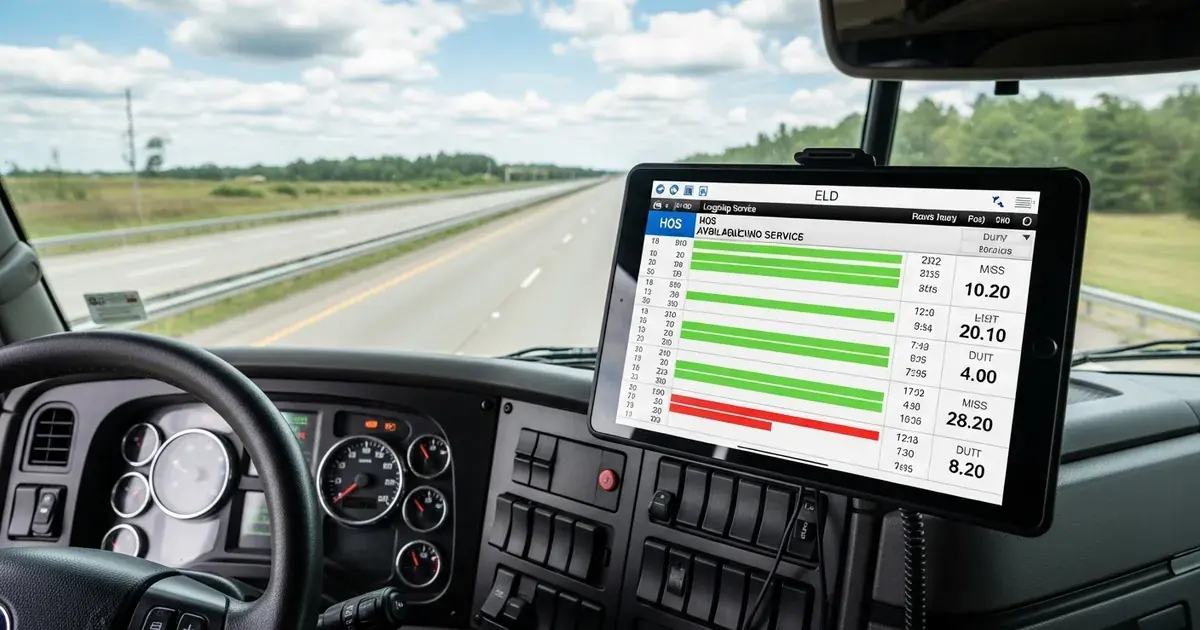
The FMCSA ELD mandate has been in full effect since December 2019, but electronic logging device compliance remains a moving target. Regulatory updates, technical specification changes, and enforcement refinements mean that fleet owners must stay current with ELD requirements to avoid violations, fines, and out-of-service orders. This guide covers the current state of ELD compliance in 2026 and what fleet owners need to know.
Current ELD Requirements Overview
The electronic logging device mandate requires most commercial motor vehicle drivers who are required to maintain records of duty status (RODS) to use a registered ELD. The device must be connected to the vehicle's engine control module (ECM) to automatically record driving time based on vehicle movement. The ELD must comply with the technical specifications in 49 CFR Part 395 Subpart B, Appendix A.
Key requirements that remain in effect include automatic recording of driving time when the vehicle is in motion, annotation capability for the driver to add notes to the driving record, data transfer capability via wireless web services and local transfer (USB or Bluetooth), tamper resistance to prevent unauthorized changes to driving records, and display of the current day's log plus the previous seven days on demand by an inspector.
Hours of Service Integration
The ELD's primary function is enforcing hours of service (HOS) compliance. The device automatically tracks the driver's status changes between Off Duty, Sleeper Berth, Driving, and On Duty Not Driving. The 11-hour driving limit, 14-hour on-duty window, 30-minute break requirement, 60/70-hour cycle limits, and 34-hour restart provision are all monitored and enforced by the ELD.
Fleet owners should ensure their ELD platform properly handles the nuances of HOS rules including short-haul exemptions for drivers operating within a 150 air-mile radius, the adverse driving conditions exception that extends the driving window by two hours, personal conveyance designations that allow off-duty movement of the vehicle, and yard move designations for on-duty not-driving vehicle movement.
Drivers who do not understand how their ELD handles these exemptions may inadvertently create violations. Regular training on ELD operation — not just initial training at implementation — is essential for maintaining compliance.
ECM Connection and Data Integrity
The ELD must be connected to the vehicle's ECM to function as a compliant device. The ECM connection provides the vehicle speed, engine hours, and vehicle miles data that the ELD uses to determine driving status. A disconnected or malfunctioning ECM connection renders the ELD non-compliant and requires the driver to reconstruct records of duty status on paper logs.
For fleet owners operating multiple truck brands, ECM connection protocols may vary. Some ELD platforms require brand-specific adapters for different engine manufacturers. Ensure your ELD provider supports all engine brands in your fleet — a device that works perfectly on a Cummins-powered truck may not function correctly on a Detroit Diesel without the proper adapter and configuration.
ECM data integrity is critical. If the ECM is providing inaccurate vehicle speed or miles data, the ELD records will be inaccurate. This can create apparent HOS violations that did not actually occur, or it can mask real violations. Calibrate ECM parameters when tires are changed to a different size, when the rear axle ratio is modified, or when the transmission is replaced — any change that affects the relationship between engine speed and vehicle speed requires recalibration.
ELD Malfunction Procedures
When an ELD malfunctions, the driver must note the malfunction on the ELD or on paper, reconstruct the driving record for the current 24-hour period and the previous seven days using paper logs, continue to manually maintain paper records until the ELD is repaired, and report the malfunction to the motor carrier within 24 hours.
The motor carrier must correct the malfunction within eight days. If the malfunction is not corrected within eight days, the driver must contact FMCSA and may be required to operate under paper logs until the device is repaired or replaced.
Fleet owners should have a malfunction response plan that includes spare ELD devices or backup units, paper log books and graph grid paper in every vehicle, driver training on paper log completion procedures (many drivers hired since 2019 have never used paper logs), and a repair or replacement process that meets the eight-day deadline.
Data Transfer and Inspection Compliance
During a roadside inspection, the driver must be able to present the ELD display showing the current day's log and the previous seven consecutive days. The inspector may also request electronic data transfer via wireless web services or local transfer methods. The driver must know how to initiate both transfer methods on their specific ELD platform.
Data transfer failures during inspections are surprisingly common and can result in violations even when the underlying driving records are compliant. The most common transfer failure causes include weak cellular signal preventing wireless transfer, Bluetooth pairing failures with the inspector's equipment, outdated ELD firmware that does not support current transfer protocols, and driver unfamiliarity with the transfer process.
Test the data transfer function on every ELD in your fleet at least quarterly. Verify that wireless and local transfer both work. Update ELD firmware promptly when updates are released — firmware updates often include fixes for transfer compatibility issues.
Fleet Management Best Practices
For fleet owners, ELD compliance extends beyond just having devices in trucks. Develop a comprehensive ELD management program that includes regular review of driver logs for accuracy and compliance, monitoring of unassigned driving time — periods when the vehicle moved but no driver was logged in, tracking ELD diagnostics and malfunctions across the fleet, maintaining records of all ELD certification documents, and keeping driver training records for ELD operation.
Unassigned driving time is a particular focus area for FMCSA enforcement. When a vehicle moves without a driver logged in, the ELD creates an unassigned driving record. Fleet managers must review and assign these records to the correct driver within 13 days. Excessive unassigned driving time in a fleet's records suggests systematic compliance problems and can trigger FMCSA intervention.
For fleet maintenance programs that include ELD system support and compliance guidance, and to learn more about best practices, see our guide on electronic logging device best practices.
For fleet compliance support and vehicle maintenance in the Southwest, call Weldon's Truck & Trailer at (334) 759-7020. We understand that compliance and maintenance work together to keep your fleet operating safely and legally.