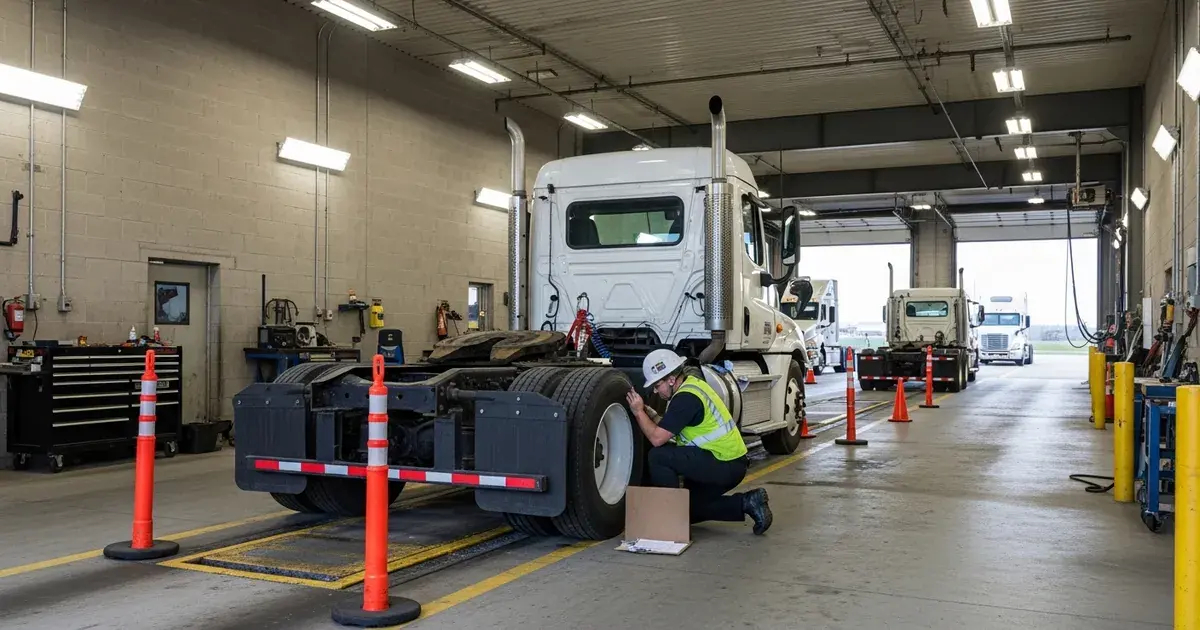
Operating a commercial motor vehicle in Arizona and Nevada means navigating a rigorous inspection and compliance landscape. The Department of Transportation, working through the Arizona Department of Public Safety (DPS), Nevada Highway Patrol, and the Commercial Vehicle Safety Alliance (CVSA), conducts thousands of roadside inspections each year across both states. Understanding how these inspections work, what inspectors look for, and how to stay compliant can protect your CDL, your safety record, and your livelihood.
Understanding CVSA Inspection Levels
The CVSA has established six standardized inspection levels used by law enforcement across North America. In Arizona and Nevada, the most common levels you will encounter are Level I, Level II, and Level III.
A Level I inspection is the most comprehensive roadside inspection. The inspector examines the driver's credentials, hours of service, the vehicle's mechanical condition, and cargo securement. This includes checking under the vehicle, inspecting brake components, and verifying all safety systems. A Level I inspection typically takes 45 to 60 minutes.
Level II is a walk-around driver and vehicle inspection. The inspector checks everything visible without getting under the vehicle. This includes tires, lights, body condition, driver documents, and visible brake components. Level II inspections are faster and more common.
Level III is a driver-only inspection focusing on credentials, hours of service compliance, medical certificate status, seatbelt use, and the Driver Vehicle Inspection Report (DVIR). This is the quickest inspection type.
Common Violations in Arizona and Nevada
Arizona DPS and Nevada Highway Patrol data show consistent patterns in the violations they find. The top violations that lead to out-of-service orders include brake system deficiencies as the number one cause, followed by tire and wheel issues including flat tires and worn tread, lighting violations particularly missing or non-functional marker lights, hours of service violations, and cargo securement failures.
Brake-related violations alone account for nearly 30 percent of all out-of-service orders. The most common brake violation is brake adjustment — pushrod travel exceeding allowable limits. This is an easily preventable issue through regular brake inspection and maintenance.
Arizona-Specific Inspection Information
Arizona operates multiple fixed inspection stations and conducts mobile inspections throughout the state. Key inspection locations include the Ehrenberg station on I-10, the Sanders station on I-40, and various mobile inspection locations on I-17 and I-40 near Flagstaff. Arizona DPS also participates in targeted enforcement operations during CVSA International Roadcheck events held annually in May or June.
Arizona has additional state-specific requirements including compliance with state weight limits, proper registration and fuel tax credentials, and adherence to Arizona's hours of service alignment with federal FMCSA regulations.
Nevada-Specific Inspection Information
Nevada Highway Patrol conducts inspections at fixed locations and through mobile enforcement teams. The primary inspection station on the Arizona-Nevada border is located on US-93 near Hoover Dam. Additional inspection activity occurs along I-15 near Las Vegas, US-95, and I-80 in northern Nevada.
Nevada requires an International Fuel Tax Agreement (IFTA) credential for interstate carriers and participates in the International Registration Plan (IRP). Ensure these documents are current before entering the state.
How to Prepare for Inspections
Preparation starts with your daily pre-trip inspection and the DVIR. A thorough pre-trip catches the same issues an inspector will find. Walk around the entire vehicle checking all lights and reflectors, tire condition and inflation, visible brake components including chambers, slack adjusters, and pushrod travel, mirrors, windshield condition, and fluid leaks.
Inside the cab, verify that all required documents are current and accessible. This includes your CDL, medical certificate, vehicle registration, proof of insurance, IFTA and IRP credentials, ELD records, and previous DVIR reports. Hours of service must be current and accurate on your ELD.
What Happens During an Out-of-Service Order
If an inspector finds violations that meet out-of-service criteria, your vehicle, your person as a driver, or both can be placed out of service. A vehicle out-of-service order means the truck cannot be moved until the violation is corrected and verified. A driver out-of-service order means you cannot drive until the violation is resolved, which usually involves rest time for hours of service violations.
Out-of-service orders appear on your permanent safety record and impact your carrier's CSA scores. Multiple violations can lead to interventions from FMCSA including compliance reviews, warning letters, or even operating authority revocation.
Fixing Violations Roadside
When an inspector identifies repairable violations, having access to mobile repair service can get you back on the road quickly. Common repairable violations include lighting issues, brake adjustment, air leaks, tire replacement, and minor equipment deficiencies. Our mobile service trucks carry the parts and equipment to address most DOT violations on-site, minimizing your out-of-service time.
For DOT compliance maintenance and roadside repair assistance in Arizona and Nevada, call Weldon's Truck & Trailer at (334) 759-7020. Our fleet maintenance programs help carriers stay compliant and reduce out-of-service violations.